A massive legal battle has erupted in New York federal courts as 9/11 families and victims of international terrorism race to claim more than $11 billion in Bitcoin seized by the U.S. government. The assets, linked to a sprawling “pig butchering” fraud and money-laundering operation, have become the center of a “race to the courthouse” involving thousands of judgment creditors seeking restitution for decades of suffering.
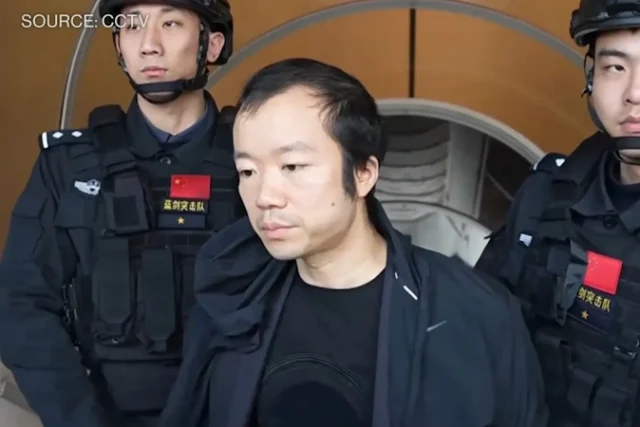
The controversy stems from the October 2024 indictment of Chen Zhi, a Cambodian national accused of masterminding a criminal enterprise built on human suffering. According to the U.S. Department of Justice, Zhi’s “Prince Group” operated forced-labor compounds where trafficked workers were coerced into conducting cryptocurrency scams on an industrial scale. The U.S. government subsequently seized approximately 127,271 Bitcoin—valued at roughly $15 billion at the time of the announcement.
While the government initially targeted the funds as proceeds of fraud, a group of terrorism victims filed a 75-page civil suit in December 2024 claiming the assets are actually “blocked assets” of Iran. The plaintiffs, who include families of soldiers killed in Iraq and victims of the 1983 Beirut barracks bombing, argue that the cryptocurrency originated from a China-Iran mining operation used by Tehran to evade U.S. sanctions.
The FloridaBulldog reported on the urgency of the legal maneuvering, noting that the Bitcoin stash has “touched off a ‘race to the courthouse’ in New York by multiple law firms seeking to claim it for the 9/11 families and other victims of terrorism.”

The legal argument hinges on the Terrorism Risk Insurance Act, which allows victims with unpaid judgments against “terrorist parties” to execute on assets seized or blocked by the U.S. government. For the 9/11 families, who hold more than $140 billion in outstanding judgments against Iran and the Taliban, this seizure represents one of the largest potential pools of recovery in history.
The complexity of the case has led to friction between different groups of victims. Recently, four law firms representing the vast majority of 9/11 wrongful death plaintiffs wrote to a federal judge to ensure that any distribution of the funds is handled equitably. They expressed a desire to avoid a chaotic “race to the courthouse” that could leave some victims behind.
As the FloridaBulldog detailed, the origin of Bitcoin is as cinematic as the legal battle: “The LuBian mining operation collapsed in December 2020 when an anonymous ‘Whitehat’—slang for an ethical hacker—breached LuBian’s pool and stole its Bitcoin.” That hacker eventually turned the private keys over to the U.S. government.
While no victims of the “pig butchering” scams themselves have yet filed claims for the funds, the battle between the various terrorism victim groups is expected to intensify. With Bitcoin’s value fluctuating daily, the stakes remain in the billions as the courts determine whether a criminal’s ill-gotten gains will finally provide a measure of financial justice for the families of the fallen.
Source: The FloridaBulldog
Disclaimer
Artificial Intelligence Disclosure & Legal Disclaimer
AI Content Policy.
To provide our readers with timely and comprehensive coverage, South Florida Reporter uses artificial intelligence (AI) to assist in producing certain articles and visual content.
Articles: AI may be used to assist in research, structural drafting, or data analysis. All AI-assisted text is reviewed and edited by our team to ensure accuracy and adherence to our editorial standards.
Images: Any imagery generated or significantly altered by AI is clearly marked with a disclaimer or watermark to distinguish it from traditional photography or editorial illustrations.
General Disclaimer
The information contained in South Florida Reporter is for general information purposes only.
South Florida Reporter assumes no responsibility for errors or omissions in the contents of the Service. In no event shall South Florida Reporter be liable for any special, direct, indirect, consequential, or incidental damages or any damages whatsoever, whether in an action of contract, negligence or other tort, arising out of or in connection with the use of the Service or the contents of the Service.
The Company reserves the right to make additions, deletions, or modifications to the contents of the Service at any time without prior notice. The Company does not warrant that the Service is free of viruses or other harmful components.