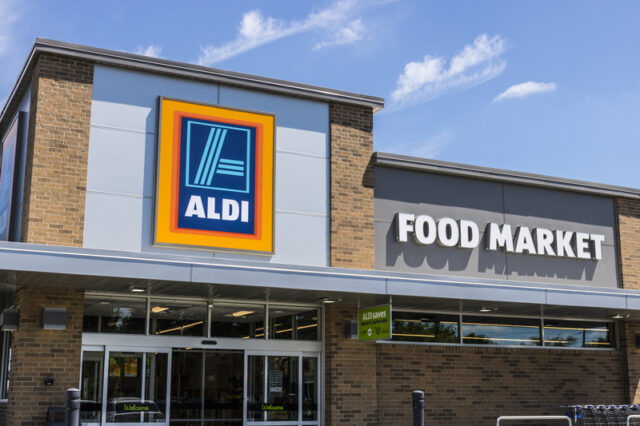
The American grocery landscape is undergoing a seismic shift as the German discount giant Aldi doubles down on its aggressive expansion across the United States. Driven by persistent inflation and a fundamental shift in consumer behavior, the retailer announced this week that it will significantly expand its domestic footprint, aiming to become the third-largest grocery chain in the country by store count.
For years, Aldi was viewed as a niche player in the U.S. market, known for its no-frills approach, quarter-cart deposits, and private-label dominance. However, as the cost of living remains a primary concern for households from coast to coast, the company’s “low-price-at-any-cost” model has moved from the fringes to the mainstream.
In a recent report detailing the company’s trajectory, the Washington Post noted the strategic timing of this surge, stating, “Aldi’s rapid ascent underscores a pivotal moment in American retail, where the traditional supermarket model is being challenged by a leaner, more efficient competitor that thrives when consumer budgets are under pressure.”
The expansion plan involves a multi-billion-dollar investment to open hundreds of new locations, particularly in the Northeast and Midwest, while also making a significant push into the Southern California and Gulf Coast markets. This growth isn’t just about physical buildings; it represents a direct challenge to industry titans like Walmart and Kroger.

The secret to Aldi’s success during inflationary periods lies in its operational efficiency. By stocking only about 1,500 frequently purchased items—compared to the 30,000 found in a typical supermarket—the company maintains high inventory turnover and low overhead. This efficiency is passed directly to the consumer, a factor that has become a lifeline for many.
Industry analysts suggest that the “stigma” of discount shopping has evaporated. Data shows that high-income households are now turning to Aldi at record rates, seeking to offset the rising costs of housing and insurance by cutting their monthly food bills. This demographic shift has emboldened the retailer to move into more affluent suburban neighborhoods where it previously lacked a presence.
As the Washington Post highlighted, this trend is reshaping the competitive landscape: “The retailer’s ability to maintain razor-thin margins while expanding its organic and premium offerings has allowed it to poach customers who previously shopped at higher-end grocers.”
However, the expansion is not without its hurdles. The retail sector continues to grapple with a tightened labor market and rising real estate costs. To combat this, Aldi is leaning heavily into automation and sustainable building practices. Many of the new stores will feature rooftop solar panels, CO2 refrigeration systems, and streamlined checkout technologies designed to move customers through the store as quickly as possible.
Furthermore, the company is investing heavily in its digital infrastructure. While Aldi was late to the e-commerce game, it has rapidly expanded its partnership with delivery services and is rolling out curbside pickup at the majority of its new and existing locations. This “omnichannel” approach is essential for competing with Walmart, which currently leads the market in online grocery sales.
Critics of the expansion point out that Aldi’s limited selection can be a drawback for “one-stop” shoppers who require specific national brands or specialized service counters like a full-service deli or pharmacy. Yet, for a growing segment of the population, the trade-off is well worth the savings.
The social impact of this expansion is also notable. By entering “food deserts”—areas with limited access to affordable, fresh produce—Aldi is positioning itself as a community partner. Its smaller store format allows it to fit into urban spaces that are too small for a traditional “big box” supermarket.
As the 2026 fiscal year progresses, the retail industry will be watching closely to see if Aldi can maintain its culture of efficiency while managing such a massive increase in scale. If the current momentum continues, the German discounter may not just be a secondary option for the budget-conscious but the primary destination for the modern American shopper.
Ultimately, Aldi’s growth is a symptom of a broader economic reality. As long as inflation remains a thorn in the side of the American consumer, the retailers who can offer the most value for every dollar will continue to dominate the headlines and the shopping aisles.
Source: The Washington Post
Disclaimer
Artificial Intelligence Disclosure & Legal Disclaimer
AI Content Policy.
To provide our readers with timely and comprehensive coverage, South Florida Reporter uses artificial intelligence (AI) to assist in producing certain articles and visual content.
Articles: AI may be used to assist in research, structural drafting, or data analysis. All AI-assisted text is reviewed and edited by our team to ensure accuracy and adherence to our editorial standards.
Images: Any imagery generated or significantly altered by AI is clearly marked with a disclaimer or watermark to distinguish it from traditional photography or editorial illustrations.
General Disclaimer
The information contained in South Florida Reporter is for general information purposes only.
South Florida Reporter assumes no responsibility for errors or omissions in the contents of the Service. In no event shall South Florida Reporter be liable for any special, direct, indirect, consequential, or incidental damages or any damages whatsoever, whether in an action of contract, negligence or other tort, arising out of or in connection with the use of the Service or the contents of the Service.
The Company reserves the right to make additions, deletions, or modifications to the contents of the Service at any time without prior notice. The Company does not warrant that the Service is free of viruses or other harmful components.