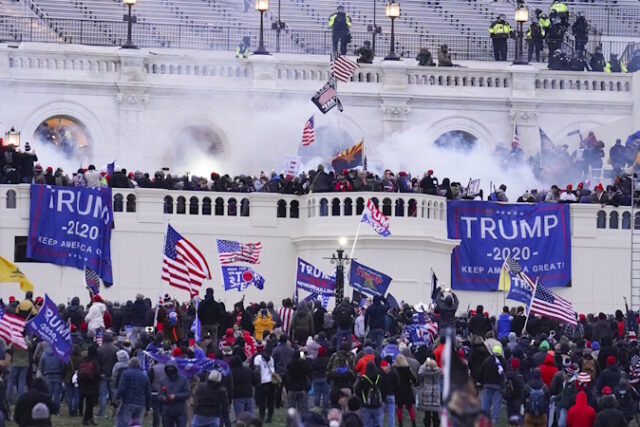
In an unprecedented move that has sent shockwaves through the American legal and political landscape, the Trump administration announced on Wednesday a sweeping new initiative to provide financial restitution to individuals prosecuted for their involvement in the January 6, 2021, Capitol riot. This policy follows through on a cornerstone campaign promise to grant full executive pardons to those the President has frequently described as “hostages” and “patriots.”
The announcement, detailed in an official executive memorandum, outlines a process by which pardoned defendants can apply for reimbursement of legal fees and court costs incurred during their respective trials and appeals. This “Justice Restitution Fund” is expected to draw on discretionary federal funds, though the exact mechanisms of financing remain a subject of intense scrutiny by congressional oversight committees and constitutional scholars alike.
The move marks a significant escalation in the President’s efforts to reframe the events of January 6. While critics view the riot as a violent assault on the seat of American democracy, the administration has framed the prosecutions as politically motivated “lawfare” orchestrated by the previous administration’s Department of Justice. By offering financial refunds, the administration is effectively attempting to erase not just the criminal records of the defendants, but the financial burdens imposed by the judicial process itself.
Reporting on the development, the Washington Post noted that “The move represents a final, defiant reversal of the federal government’s pursuit of those who breached the Capitol, signaling that the administration views the legal system’s previous actions as a fundamental miscarriage of justice.” The Post further observed that this initiative is likely to face immediate legal challenges, as experts question whether the President has the constitutional authority to unilaterally appropriate funds for the reimbursement of private legal expenses.

Legal analysts are divided over the policy’s implications. Some argue that the pardon power, as outlined in Article II of the Constitution, is nearly absolute and could, in theory, extend to the remission of fines and the restoration of property. However, using taxpayer dollars to reimburse private attorneys’ fees is largely uncharted territory. Opponents of the plan argue that it violates the Appropriations Clause, which dictates that “No Money shall be drawn from the Treasury, but in Consequence of Appropriations made by Law.”
“This is an attempt to use the federal treasury as a private insurance policy for political allies,” said Sarah Henderson, a senior fellow at the Institute for Constitutional Integrity. “The pardon power is meant to show mercy, not to function as a mechanism for the government to bankroll the defense of those who were lawfully convicted of crimes against the state.”
Within the halls of Congress, the reaction was predictably polarized. Republican leadership praised the move as a necessary step toward “national healing” and the rectification of what they term “the weaponization of justice.” Representative Marcus Thorne (R-TX) stated, “These citizens were targeted for their beliefs. It is only right that the government they love makes them whole again after they were bankrupted by a biased legal system.”
Conversely, Democratic lawmakers have vowed to block the transfer of funds. “This is a slap in the face to the law enforcement officers who defended the Capitol that day,” said Senate Minority Leader Robert Miller. “To use public money to reward those who engaged in an insurrection is a betrayal of the oath of office. We will use every tool at our disposal to ensure that not one cent of taxpayer money is used for this purpose.”
As the administration prepares to open the application portal for refunds, the Department of Justice has begun identifying eligible candidates. The White House estimate suggests that several thousand individuals could be eligible for some form of reimbursement, with total payouts potentially reaching into the hundreds of millions of dollars.
The political stakes could not be higher. As the nation remains deeply divided over the legacy of January 6, this latest policy ensures that the events of that day will remain at the forefront of the American consciousness. Whether the “Justice Restitution Fund” survives the inevitable court battles remains to be seen, but its introduction has already cemented its status as one of the most controversial executive actions in modern history.
Source: The Washington Post
Disclaimer
Artificial Intelligence Disclosure & Legal Disclaimer
AI Content Policy.
To provide our readers with timely and comprehensive coverage, South Florida Reporter uses artificial intelligence (AI) to assist in producing certain articles and visual content.
Articles: AI may be used to assist in research, structural drafting, or data analysis. All AI-assisted text is reviewed and edited by our team to ensure accuracy and adherence to our editorial standards.
Images: Any imagery generated or significantly altered by AI is clearly marked with a disclaimer or watermark to distinguish it from traditional photography or editorial illustrations.
General Disclaimer
The information contained in South Florida Reporter is for general information purposes only.
South Florida Reporter assumes no responsibility for errors or omissions in the contents of the Service. In no event shall South Florida Reporter be liable for any special, direct, indirect, consequential, or incidental damages or any damages whatsoever, whether in an action of contract, negligence or other tort, arising out of or in connection with the use of the Service or the contents of the Service.
The Company reserves the right to make additions, deletions, or modifications to the contents of the Service at any time without prior notice. The Company does not warrant that the Service is free of viruses or other harmful components.