As the financial landscape of early 2026 continues to shift, a growing number of American retirees are finding that the traditional “three-to-six months” of savings may no longer be enough. Rising healthcare costs, persistent service-sector inflation, and the unpredictable nature of equity markets have forced a re-evaluation of how seniors manage their liquid assets.
According to a recent CNBC report, the importance of an accessible “cash bucket” has never been more pronounced for those living on a fixed income. While younger workers are often advised to keep emergency funds for job loss, retirees must use these funds as a buffer against “sequence of returns risk”—the danger of being forced to sell stocks during a market downturn to pay for basic living expenses.
The Liquidity Gap
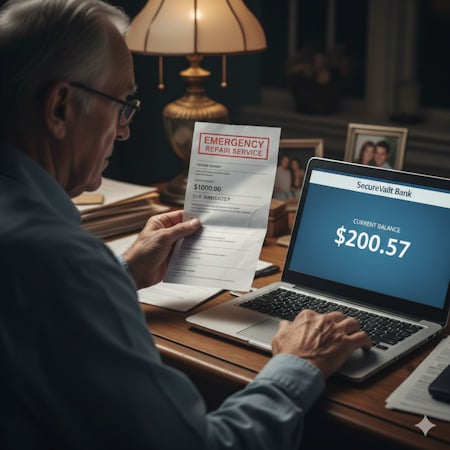
“For retirees, an emergency fund is more than just a rainy-day fund; it is a defensive strategy for their entire portfolio,” CNBC noted in its analysis of current retirement trends. Without a robust cash reserve, a single major home repair or a spike in out-of-pocket medical costs can force a senior to withdraw from their 401(k) or IRA at the worst possible time.
Recent data suggests that while many Baby Boomers entered retirement with significant home equity, their “cash on hand” is often lower than recommended. This liquidity gap creates a precarious situation where retirees are “asset rich but cash poor.” To combat this, financial advisors are now suggesting that retirees maintain one to two years of liquid expenses in high-yield savings accounts or short-term certificates of deposit (CDs).

Inflation’s Lingering Bite
While headline inflation numbers have stabilized after the spikes seen in previous years, the cost of “senior-specific” inflation remains high. Healthcare premiums, prescription drug costs, and assisted living services have continued to climb at rates exceeding the standard Consumer Price Index.
CNBC notes that these specific inflationary pressures are often what deplete a retiree’s savings faster than anticipated. “The reality of 2026 is that a $10,000 emergency fund in 2020 only has the purchasing power of roughly $7,500 today,” the report indicates. This erosion of value means retirees must aggressively top off their savings even after they have stopped working.
Where to Park the Cash
The good news for seniors in 2026 is the availability of competitive interest rates for savers. For the first time in decades, retirees can earn a meaningful return on their emergency funds without taking on market risk. High-yield savings accounts and money market funds are currently offering yields that help offset the bite of inflation.
However, experts interviewed by CNBC warn against “chasing yield” at the expense of accessibility. The primary goal of an emergency fund is liquidity. If the money is locked in a long-term vehicle, it cannot serve its purpose when a central air unit fails or an emergency dental procedure is required.
The Psychological Benefit
Beyond the math, there is a significant psychological component to having a well-funded emergency account. Financial anxiety is a leading cause of stress for seniors, many of whom fear outliving their money.
“Having that cash buffer allows retirees to sleep better at night, knowing they won’t have to check the ticker tape every morning to see if they can afford their groceries,” CNBC reported. This “peace of mind” dividend is arguably just as valuable as the interest the account earns.
A Call to Action
As we move further into 2026, the message for those in or approaching retirement is clear: prioritize liquidity. Whether it is through automating transfers from a checking account or directing a portion of a Social Security cost-of-living adjustment (COLA) into savings, building that wall of cash is the most effective way to safeguard a golden age.
Ultimately, the goal is to ensure that an unexpected bill remains a minor inconvenience rather than a life-altering financial crisis. As CNBC concludes, in the current economic environment, “the best investment a retiree can make might not be in the stock market at all, but in the security of their own savings account.”
Disclaimer
Artificial Intelligence Disclosure & Legal Disclaimer
AI Content Policy.
To provide our readers with timely and comprehensive coverage, South Florida Reporter uses artificial intelligence (AI) to assist in producing certain articles and visual content.
Articles: AI may be used to assist in research, structural drafting, or data analysis. All AI-assisted text is reviewed and edited by our team to ensure accuracy and adherence to our editorial standards.
Images: Any imagery generated or significantly altered by AI is clearly marked with a disclaimer or watermark to distinguish it from traditional photography or editorial illustrations.
General Disclaimer
The information contained in South Florida Reporter is for general information purposes only.
South Florida Reporter assumes no responsibility for errors or omissions in the contents of the Service. In no event shall South Florida Reporter be liable for any special, direct, indirect, consequential, or incidental damages or any damages whatsoever, whether in an action of contract, negligence or other tort, arising out of or in connection with the use of the Service or the contents of the Service.
The Company reserves the right to make additions, deletions, or modifications to the contents of the Service at any time without prior notice. The Company does not warrant that the Service is free of viruses or other harmful components.