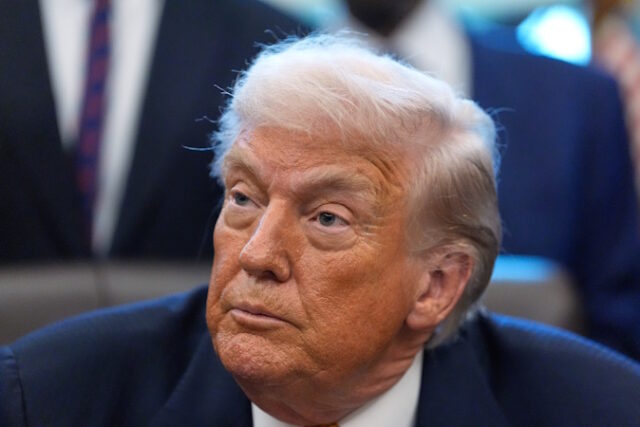
WASHINGTON — In a major move to reshape the American medical landscape, President Donald J. Trump officially unveiled a legislative framework on Thursday titled “The Great Healthcare Plan.” The proposal, which comes as the nation grapples with the expiration of enhanced Affordable Care Act (ACA) subsidies, seeks to fundamentally pivot the U.S. healthcare system away from “big insurance” and toward a consumer-driven model.
Direct Payments Over Corporate Subsidies
The centerpiece of the plan is a radical restructuring of federal financial support. For years, the federal government has sent billions in taxpayer-funded subsidies directly to insurance companies to lower premiums for ACA exchange users. Trump’s proposal would end these “government payoffs” and instead send that money directly to eligible Americans.
While the White House has not yet finalized the exact mechanism, the administration suggests these funds could be deposited into tax-advantaged Health Savings Accounts (HSAs). This would allow patients to use the money to purchase their own insurance or pay for out-of-pocket costs, theoretically forcing insurers to compete for individual customers rather than government contracts.
Slashing Prescription Drug Costs
The plan also targets “Big Pharma” by codifying Most-Favored-Nation (MFN) pricing deals. This policy would require pharmaceutical companies to offer drugs in the U.S. at the same low prices they charge other developed nations.

“We will now be paying the lowest cost paid by any other nation,” the President stated during the announcement. Additionally, the administration aims to move more prescription drugs to over-the-counter (OTC) status. By removing the requirement for doctor visits and prescriptions for certain safe medications, the White House believes competition will drive prices down and save consumers time.
Unprecedented Transparency
Under the “Great Healthcare Plan,” any hospital or insurer that accepts Medicare or Medicaid would be required to prominently post their actual prices—not just estimates—on their walls and websites. The plan also introduces a “Plain English Insurance” standard, mandating that insurers disclose:
- The percentage of revenue spent on claims versus overhead and profit.
- The frequency of claim denials and the success rate of appeals.
- Average wait times for routine care.Bipartisan Hurdles
The proposal arrives at a tense moment in Washington. While the House recently passed a three-year extension of the ACA’s enhanced subsidies, the Senate remains divided. Critics of the President’s plan, including many healthcare analysts, warn that moving to a direct-payment model could increase the number of uninsured Americans and disrupt the stability of the insurance markets.
However, the administration remains optimistic, citing Congressional Budget Office estimates that suggest funding Cost-Sharing Reductions (CSRs) directly could reduce premiums for the most popular plans by an average of 10% to 15%.
Sources and References
- White House: President Trump Unveils The Great Healthcare Plan
- Committee for a Responsible Federal Budget: White House Releases “Great Healthcare Plan”
- CBS News: Trump announces “The Great Healthcare Plan,” but it’s sparse on details
- AJMC: Trump Announces “The Great Healthcare Plan,” Proposing Direct Payments, Price Transparency
- KFF: Policy Changes Bring Renewed Focus on High-Deductible Health Plans
Disclaimer
Artificial Intelligence Disclosure & Legal Disclaimer
AI Content Policy.
To provide our readers with timely and comprehensive coverage, South Florida Reporter uses artificial intelligence (AI) to assist in producing certain articles and visual content.
Articles: AI may be used to assist in research, structural drafting, or data analysis. All AI-assisted text is reviewed and edited by our team to ensure accuracy and adherence to our editorial standards.
Images: Any imagery generated or significantly altered by AI is clearly marked with a disclaimer or watermark to distinguish it from traditional photography or editorial illustrations.
General Disclaimer
The information contained in South Florida Reporter is for general information purposes only.
South Florida Reporter assumes no responsibility for errors or omissions in the contents of the Service. In no event shall South Florida Reporter be liable for any special, direct, indirect, consequential, or incidental damages or any damages whatsoever, whether in an action of contract, negligence or other tort, arising out of or in connection with the use of the Service or the contents of the Service.
The Company reserves the right to make additions, deletions, or modifications to the contents of the Service at any time without prior notice. The Company does not warrant that the Service is free of viruses or other harmful components.