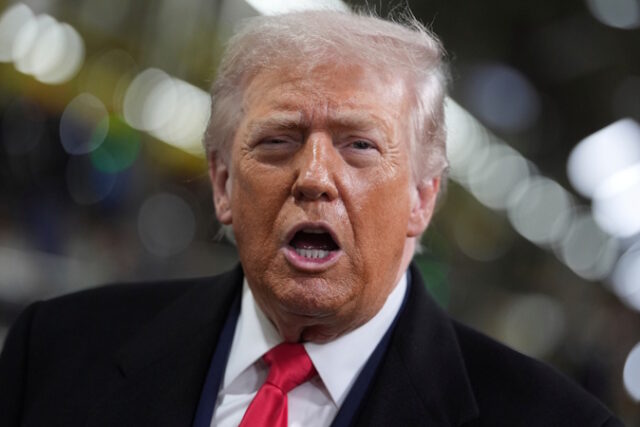
WASHINGTON — A wave of new polling released today, Wednesday, January 14, 2026, reveals a nation deeply wary of President Donald Trump’s increasingly assertive foreign policy and domestic economic claims. As the administration floats the possibility of military force to secure territory in Greenland and considers intervention in Iran’s internal instability, the American public has signaled a firm “thumbs down” to new military entanglements. Meanwhile, in the critical battleground state of Michigan, a “meh” economic outlook is creating a complicated backdrop for the president’s “America First” agenda.
The Greenland Gambit: Low Support for Annexation
One of the most striking findings from today’s data comes from a Reuters/Ipsos poll, which shows that just 17% of Americans approve of the administration’s efforts to acquire Greenland. Despite the president’s recent social media posts labeling anything less than U.S. control as “unacceptable,” the public remains largely unconvinced of the strategic necessity of purchasing—or seizing—the island.
The opposition to using military force for such a purpose is nearly universal. According to the poll, 71% of Americans believe using military force to take possession of Greenland from Denmark is a “bad idea.” This sentiment crosses party lines, though with varying intensity: 90% of Democrats and 60% of Republicans oppose a military takeover.
Furthermore, the poll found that 66% of respondents are worried that the pursuit of Greenland will cause irreparable damage to the NATO alliance and relationships with European allies. This comes as Vice President JD Vance and Secretary of State Marco Rubio meet with Danish and Greenlandic foreign ministers at the White House today—a meeting held under the shadow of the president’s “all options on the table” rhetoric.

Iran: A Vigorous “Thumbs Down” to Intervention
The appetite for military action is even lower regarding the Middle East. A Quinnipiac University national poll released this morning shows that 70% of voters oppose U.S. military action against Iran in response to the killing of protesters and internal chaos within the Islamic Republic.
The resistance is particularly strong among unaffiliated voters (80%) and Democrats (79%), but even a majority of Republicans (53%) now signal they are against intervention. Perhaps more significantly, 70% of all voters believe the president should be required to seek Congressional approval before taking military action against another nation, suggesting a growing desire for checks on executive power as international tensions rise.
“Talk of the U.S. military potentially intervening in Iran’s internal chaos gets a vigorous thumbs down,” said Tim Malloy, a polling analyst at Quinnipiac. He noted that voters appear to be signaling for a “backstop” against foreign crises.
While the White House focuses on global maneuvers, the domestic front remains a primary concern for voters in the Midwest. President Trump visited Detroit yesterday, telling the Detroit Economic Club that “inflation is defeated” and a “Trump economic boom” is underway. However, new polling from The Glengariff Group (commissioned by WDIV/Detroit News) and Baker Consulting Group paints a much more nuanced picture of Michigan’s “muddle-through” economy.
In a direct contradiction to the administration’s “Michigan Miracle” narrative, the state continues to fall in national wage rankings. University of Michigan economist Gabriel Ehrlich noted that over the last 35 years, Michigan has shifted from wages that were 10% above the national average to 4% below it. While the president’s tariffs have provided some protection for the auto industry, many business leaders in the state say they are “scared to act” due to policy uncertainty and “tariff flip-flops.”
National Economic Sentiment: A Partisan Divide
On a national scale, the Economist/YouGov poll released today shows that economic sentiment is becoming increasingly bifurcated along party lines. Republican optimism has surged, with 57% of Republicans now saying the economy is “getting better,” up from 38% in October. In contrast, only 3% of Democrats and 15% of Independents share that positive view.
Summary of Key Poll Findings (January 14, 2026)
As the 2026 midterm elections approach, these polls suggest a significant disconnect between the president’s high-stakes geopolitical ambitions and the “kitchen table” concerns of the American electorate. While the administration views Greenland and Iran through the lens of national security and “Golden Dome” defense systems, the public appears more focused on the cost of the grocery bag and the risk of another “overseas quagmire.”
With the “presidency going rogue,” as some historians suggest, the coming months will test whether the administration’s “ferocity” will rally the base or further alienate a public that is increasingly signaling a desire for a “less active” role in global disputes.
List of Sources and Article Links
- Ipsos / Reuters Poll
- Americans oppose using military force to take possession of Greenland
- https://www.ipsos.com/en-us/americans-oppose-using-military-force-take-possession-greenland
- Quinnipiac University National Poll
- 7 Out Of 10 Voters Do Not Want The U.S. To Take Military Action Against Iran For Killing Of Protesters
- https://poll.qu.edu/poll-release?releaseid=3945
- YouGov / The Economist
- Republican sentiment about the economy has become more positive since the fall
- https://today.yougov.com/politics/articles/53882-republican-sentiment-economy-more-positive-since-the-fall-january-9-12-2026-economist-yougov-poll
- WDIV-TV / The Detroit News (Glengariff Group)
- Here’s how Michigan voters feel about Trump’s handling of the economy, according to poll
- https://www.clickondetroit.com/news/local/2026/01/13/heres-how-michigan-voters-feel-about-trumps-handling-of-the-economy-according-to-poll/
- Gallup News
- Americans Predict Challenging 2026 Across 13 Dimensions
- https://news.gallup.com/poll/700448/americans-predict-challenging-2026-across-dimensions.aspx
- Marist Poll
- 2026 Economic Outlook: More Than Six in Ten Say Economy is Not Working for Them Personally
- https://maristpoll.marist.edu/polls/2026-economic-outlook-december-2025/
- Bridge Michigan
- Report: Aging crisis to cause Michigan to lose out on economic boom
- https://bridgemi.com/business-watch/report-aging-crisis-to-cause-michigan-to-lose-out-on-economic-boom/
- University of Michigan (RSQE)
- The Michigan Economic Outlook for 2025–2027
- https://lsa.umich.edu/content/dam/econ-assets/Econdocs/RSQE%20PDFs/RSQE_MI_Economic_Forecast_May2025.pdf
Disclaimer
Artificial Intelligence Disclosure & Legal Disclaimer
AI Content Policy.
To provide our readers with timely and comprehensive coverage, South Florida Reporter uses artificial intelligence (AI) to assist in producing certain articles and visual content.
Articles: AI may be used to assist in research, structural drafting, or data analysis. All AI-assisted text is reviewed and edited by our team to ensure accuracy and adherence to our editorial standards.
Images: Any imagery generated or significantly altered by AI is clearly marked with a disclaimer or watermark to distinguish it from traditional photography or editorial illustrations.
General Disclaimer
The information contained in South Florida Reporter is for general information purposes only.
South Florida Reporter assumes no responsibility for errors or omissions in the contents of the Service. In no event shall South Florida Reporter be liable for any special, direct, indirect, consequential, or incidental damages or any damages whatsoever, whether in an action of contract, negligence or other tort, arising out of or in connection with the use of the Service or the contents of the Service.
The Company reserves the right to make additions, deletions, or modifications to the contents of the Service at any time without prior notice. The Company does not warrant that the Service is free of viruses or other harmful components.