By Tom Marquardt And Patrick Darr
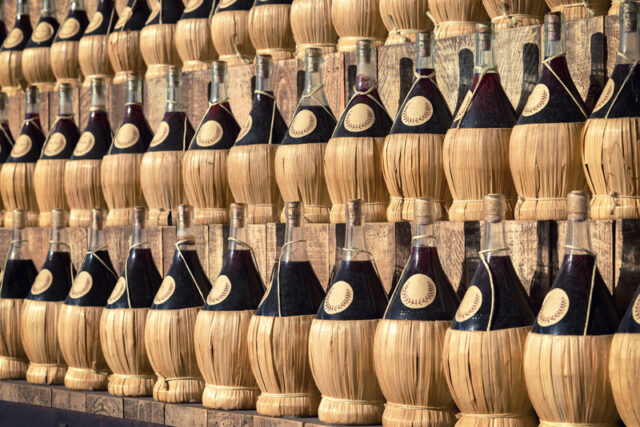
Chianti has shed its old straw-covered fiasco image and, over the past decade, taken another leap forward under stricter quality rules. During our recent visit to this idyllic Italian region, we tasted several new releases that proved the point.
In 2014, the Gran Selezione DOCG was introduced above the entry-level Chianti Classico and the elevated Riserva. To qualify, all grapes must come from the estate, the wine must age at least 30 months, and the alcohol level must be higher; at least 80 percent of the blend must be native sangiovese, with the remainder drawn from other local or international varieties.

By 2017, the regulations tightened again: Gran Selezione will need at least 90 percent sangiovese, with the balance limited to specific indigenous grapes like canaiolo and colorino, and labels can name a single commune or village of origin. You might think these distinctions don’t matter if all you want is a budget Chianti to pair with pizza—stick with Chianti Classico and you’ll be happy enough—but you’ll miss out on a world of remarkable wines.

Though the new categories can seem confusing, they’re meant to highlight precise origins much as the French appellation system does, and to reassert the dominance of local grapes (sangiovese) over the international varieties (merlot, syrah, cabernet sauvignon) that fueled the Super-Tuscan phenomenon. Producers may still use foreign grapes, but wines containing them won’t earn the updated Additional Geographic Units (UGA) designation—a rule that may sideline some highly scored merlot blends.
At Castello di Ama, we were bowled over by the 2018 San Lorenzo Gran Selezione, which includes 10 percent merlot and black malvasia, and by L’Apparita, a tiny-lot, 100 percent merlot bottling that rivals Italy’s top merlots like Masseto. Nestled in Gaioli—one of Chianti Classico’s most celebrated zones for powerful, well-structured wines—Ama occupies an 18th-century village of just five inhabitants, anchored by a charming church well worth the detour. Since founding the estate in 1976, Marco Pallanti (winemaker since 1982) and CEO Lorenza Sebasti have driven its rise. Their vineyards, spread across four surrounding valleys, yield fruit sparingly. We also enjoyed the Haiku blend—50 percent sangiovese, 25 percent cabernet franc, and 25 percent merlot—which perfectly illustrates the region’s evolving style.
The latest vintages—2021 and 2022—shine with brilliance. Our exploration extended to bottles from decades past, confirming Chianti Classico’s remarkable longevity. During lunch in a tiny ristorante in Greve, a sommelier challenged Tom with a blind tasting. The wine’s brick-hued edges suggested a decade of cellaring, yet it revealed itself as a 1998 Querciabella Chianti Classico—24 years old and still vibrant and complex. This revelation upended our understanding of what these wines can achieve with time.
The 2021 and 2022 vintages are magnificent. We’ve tasted much older vintages as well and they are proof that Chianti Classico is capable of aging. While at a restaurant in Greve, Tom was given a glass of chianti and asked to guess it’s age. He guessed 10 years based on its brick color, but in fact it was a 1998 Querciabella Chianti Classico. A Chianti Classico aging this long and tasting so well was mind-boggling.
Here are some other chiantis we have recently tasted and recommend:
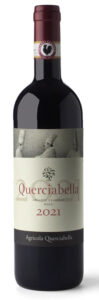
Querciabella Chianti Classico DOCG 2021 ($35). This producer has many higher-end wines, but this all-sangiovese version has brilliance and depth of flavor. Start here and consider the more expensive riserva.
Marchesi Antinori Badia a Passignano Chianti Classico Gran Selezione San Donato 2021 ($60). Fresh fruit character, full body, floral aromas and pure sangiovese.
Fattoria Poggerino Chianti Classico 2022 ($30). Deep and fresh cherry flavors abound in this softly wrapped, all-sangiovese chianti.
Ruffino Chianti Classico Riserva Ducale Oro Gran Selezione 2022 ($35-40). About 20 percent of merlot, cabernet sauvignon and other red grapes pair with sangiovese to make the Oro a spectacular and graceful blend.
Tenuta Perano Chianti Classico 2022 ($23). This property in Gaiole inspired Frescobaldi’s Chianti Classico estate. With vineyards perched more than 1,600 feet above sea level, the soil gives up a bold and expressive wine made primarily of sangiovese grapes. It has a floral and herbal nose with cherry and plum favors.
Sogno Mediterraneo Toscana IGT 2022 ($22). Forward blackberry fruit with hints of dark chocolate. Silky tannins make it an easy drink and a good value.
Vigneti La Selvanella “La Selvanella” Chianti Classico Riserva DOCG 2020 ($47). Inky in color with sweet cherry and herbal flavors with hints of earth and almonds.
Wine picks
Rex Hill Pinot Noir Willamette Valley 2022 ($38). An excellent example of Oregon pinot noir. Berry, plum and rhubarb flavors and scents with a bare bit of oak and a hint of spice. Very good.
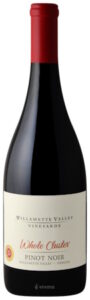
Willamette Valley Vineyards Willamette Valley Whole Cluster Pinot Noir 2023 ($29). Whole cluster and carbonic maceration fermentation combine to craft this wine. The result is deep ripe cherry notes and a hint of earthiness result in a wine that is ready to drink now.
Domaine des Nouelles Rose d’Anjou 2024 ($12 – 16). This beauty is an amazing bargain from the Loire Valley. It is made up of 95 percent grolleau grapes and expresses bright cherry, peach, and honeydew melon notes in a wonderful drinkable package. Try with spicy cuisine.
Charles Krug Sauvignon Blanc Napa Valley 2023 ($40). Classic, well-made Napa Valley sauvignon blanc with grassy, herbal notes accented with lime zest. Refreshing!
Brassfield Estates Eruption Estate Red Wine High Valley Volcano Ridge Vineyard 2021($20-28). This a big bold brawny red wine. Crafted from seven red grape varieties led by cabernet sauvignon grown on the flanks of an ancient volcano. Big intense berry fruits but with soft agreeable tannins. A hint of eucalyptus in the finish.
Disclaimer
Artificial Intelligence Disclosure & Legal Disclaimer
AI Content Policy.
To provide our readers with timely and comprehensive coverage, South Florida Reporter uses artificial intelligence (AI) to assist in producing certain articles and visual content.
Articles: AI may be used to assist in research, structural drafting, or data analysis. All AI-assisted text is reviewed and edited by our team to ensure accuracy and adherence to our editorial standards.
Images: Any imagery generated or significantly altered by AI is clearly marked with a disclaimer or watermark to distinguish it from traditional photography or editorial illustrations.
General Disclaimer
The information contained in South Florida Reporter is for general information purposes only.
South Florida Reporter assumes no responsibility for errors or omissions in the contents of the Service. In no event shall South Florida Reporter be liable for any special, direct, indirect, consequential, or incidental damages or any damages whatsoever, whether in an action of contract, negligence or other tort, arising out of or in connection with the use of the Service or the contents of the Service.
The Company reserves the right to make additions, deletions, or modifications to the contents of the Service at any time without prior notice. The Company does not warrant that the Service is free of viruses or other harmful components.