WASHINGTON — In a bold display of high-stakes diplomacy backed by decisive military action, President Donald Trump convened a pivotal meeting with nearly two dozen of the world’s most influential oil executives at the White House on Friday. The audacious proposal: a staggering $100 billion private-sector investment to resuscitate Venezuela’s crippled energy infrastructure, now under de facto U.S. control. This extraordinary summit unfolded against the dramatic backdrop of the U.S. Southern Command announcing the pre-dawn seizure of the MT Olina, yet another sanctioned oil tanker, marking the fifth such interdiction in a month and signaling an intensified “quarantine” of Venezuelan crude.
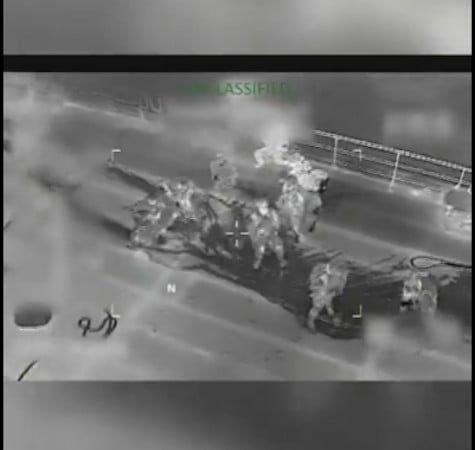
This morning, a @USCG tactical team, supported by @USMC and @USNavy , boarded and seized Motor Tanker (M/T) Olina in international waters east of the Caribbean. Interagency coordination, and an unstoppable joint force, were instrumental in executing a safe, carefully orchestrated… pic.twitter.com/PdiF41LQQR
— U.S. Coast Guard (@USCG) January 9, 2026
A New Era of “Petro-Diplomacy”
The East Room gathering was a veritable who’s who of the global energy sector, featuring CEOs from titans such as Chevron, ExxonMobil, ConocoPhillips, Shell, BP, and Halliburton. President Trump, flanked by key strategists including Secretary of State Marco Rubio and the newly appointed Energy Secretary Chris Wright, presented his vision as a “grand bargain” designed to catalyze Venezuela’s economic recovery while simultaneously driving U.S. domestic energy prices to an unprecedented target of $50 a barrel.
“At least 100 Billion Dollars will be invested by BIG OIL,” Trump proclaimed in a characteristic pre-meeting social media blitz. Inside the meeting, he painted the recent capture of Nicolás Maduro by U.S. forces as the dawn of a “new era” of Western Hemisphere energy dominance, effectively presenting the oil giants with an opportunity to reshape the geopolitical energy landscape.

Executive Cautiousness Amidst Presidential Confidence
Despite the President’s confident pronouncements, the atmosphere among the assembled executives was reportedly tinged with “cautious skepticism.” While Trump assured them of “total safety and total security” for their future investments and personnel, industry leaders pressed for robust legal frameworks and guarantees against the kind of asset expropriation that has historically plagued Venezuela.
ExxonMobil CEO Darren Woods, a prominent voice in the room, articulated the industry’s reservations by noting that Venezuela would require “significant changes in its legal and operating environment” before his company would consider committing major capital. He pointed to the painful precedent of past expropriations under the Chávez and Maduro regimes, emphasizing the need for ironclad protections for foreign investments. ConocoPhillips CEO Ryan Lance echoed these concerns, pointedly reminding the President that his firm is still actively seeking over $12 billion in compensation for assets seized more than a decade ago. Trump, known for his direct approach, dismissed these historical grievances with a blunt promise: “We’re going to start with an even plate, a clean slate.”
BP CEO Bernard Looney reportedly emphasized the need for a “stable and transparent regulatory environment,” while Shell CEO Wael Sawan cautiously welcomed the “potential for revitalization” but stressed that “due diligence and risk assessment would be paramount.” The consensus among the executives seemed to be that while the opportunity was immense, the political and legal complexities remained formidable.
The Widening Net: Seizure of the MT Olina
Concurrently with the White House summit, the U.S. military was executing the administration’s “complete blockade” strategy in the Caribbean. In the pre-dawn hours, at approximately 3:00 a.m. local time, elite U.S. Marines and Coast Guard personnel, launched from the formidable aircraft carrier USS Gerald R. Ford, conducted a swift and decisive boarding operation on the MT Olina.
The vessel, identified by officials as part of a clandestine “ghost fleet” employing sophisticated tactics like flag hopping and disabling transponders to circumvent sanctions, was intercepted east of the Caribbean Sea. Visual evidence released by U.S. Southern Command depicted a highly coordinated operation, with a helicopter-borne assault team rappelling onto the tanker’s deck. Intelligence reports confirmed the Olina was laden with a full cargo of Venezuelan crude, estimated to be worth tens of millions of dollars.
“The ghost fleets will not outrun justice, nor will they escape our expanding reach,” declared Homeland Security Secretary Kristi Noem in a subsequent press conference. “We are owning the sea, and every illicit barrel of oil will be accounted for.”
The Olina seizure marks a significant escalation in the administration’s campaign, following closely on the heels of other high-profile interdictions. Earlier this week, U.S. forces, with aerial and naval support, pursued and ultimately seized the Russian-flagged Marinera in the North Atlantic. That operation reportedly involved a two-week cat-and-mouse chase, with unconfirmed reports suggesting the involvement of shadowing Russian naval assets. The consistent success of these interdictions underscores the U.S. military’s growing dominance in projecting power across global maritime trade routes.
Geopolitical Implications and Divisive Reactions
The administration’s “maximum pressure” campaign has effectively positioned the United States as the arbiter of Venezuela’s primary economic lifeline: its oil exports. While Acting President Delcy Rodriguez was swiftly sworn in following Maduro’s capture, President Trump has remained unapologetic about the U.S. role in the transition, publicly stating earlier this week, “We’re in charge, and we’re cleaning up a mess.”
The dual strategy of military intervention and corporate solicitation has, predictably, drawn sharp criticism. Left-leaning advocacy groups and environmental organizations, such as Common Dreams, have vociferously condemned the meeting as a blatant act of “extractive colonialism,” arguing that the entire military intervention was orchestrated primarily to benefit fossil fuel industry donors and secure geopolitical advantages for U.S. corporations. They highlight the ecological risks and the potential for exacerbating social inequalities under such a regime.
Conversely, influential figures in Congress and conservative think tanks have lauded the administration’s aggressive posture. They contend that “unleashing” Venezuela’s vast oil reserves, the largest in the world, is not only a strategic imperative for long-term global energy stability but also a crucial mechanism for driving down inflation and fostering economic prosperity both domestically and regionally.
As the White House meeting concluded, some firms, notably Chevron, indicated a readiness to ramp up Venezuelan production within 12 to 18 months, contingent on security and legal assurances. However, the ambitious $100 billion figure remains, for now, an aspirational target rather than a firm contractual commitment. The administration’s audacious strategy continues to unfold as a two-pronged offensive: a powerful invitation to the world’s biggest drillers coupled with the relentless application of military force to reshape the global energy landscape. The coming months will reveal whether this calculated gamble will yield the promised dividends of economic revitalization and strategic dominance.
Sources & Links
- AP News: Texas oil executives meet with Trump on Venezuela
- CBS News: Watch Live: Trump meets with major oil executives about Venezuela at White House
- USNI News: Marines, Coast Guard Seize Tanker Olina in Caribbean
- The Guardian: US military forces seize fifth tanker in effort to control Venezuelan oil
- Washington Examiner: Trump meets with oil executives in bid to boost US drilling in Venezuela
- ANI News: US forces seize another oil tanker in Caribbean, say “no safe haven for criminals”
- Common Dreams: Environmental Groups Decry ‘Extractive Colonialism’ After Trump’s Oil Meeting
- Reuters: ExxonMobil CEO on Venezuela: ‘Significant changes’ needed for investment
- Bloomberg: ConocoPhillips Still Seeks $12 Billion From Venezuela After Seizures
Disclaimer
Artificial Intelligence Disclosure & Legal Disclaimer
AI Content Policy.
To provide our readers with timely and comprehensive coverage, South Florida Reporter uses artificial intelligence (AI) to assist in producing certain articles and visual content.
Articles: AI may be used to assist in research, structural drafting, or data analysis. All AI-assisted text is reviewed and edited by our team to ensure accuracy and adherence to our editorial standards.
Images: Any imagery generated or significantly altered by AI is clearly marked with a disclaimer or watermark to distinguish it from traditional photography or editorial illustrations.
General Disclaimer
The information contained in South Florida Reporter is for general information purposes only.
South Florida Reporter assumes no responsibility for errors or omissions in the contents of the Service. In no event shall South Florida Reporter be liable for any special, direct, indirect, consequential, or incidental damages or any damages whatsoever, whether in an action of contract, negligence or other tort, arising out of or in connection with the use of the Service or the contents of the Service.
The Company reserves the right to make additions, deletions, or modifications to the contents of the Service at any time without prior notice. The Company does not warrant that the Service is free of viruses or other harmful components.