WASHINGTON — In a move that signaled a dramatic shift in Western Hemisphere energy dynamics, President Donald Trump announced Tuesday that Venezuela’s newly installed “interim authorities” have agreed to transfer between 30 million and 50 million barrels of crude oil to the United States.
The announcement, made via social media, follows the high-stakes military operation on January 2, 2026, that resulted in the capture of Nicolás Maduro. The President stated that the oil, which he described as “high quality” and “sanctioned,” would be sold at market price. Crucially, the President asserted that the resulting revenue would be “controlled by me” to ensure the funds benefit the people of both the United States and Venezuela.
Direct Orders to the Department of Energy
President Trump has reportedly instructed Energy Secretary Chris Wright to execute the plan immediately. The logistics involve using floating storage vessels currently held in Venezuelan waters to transport the crude directly to unloading docks at U.S. ports.

“I have asked Energy Secretary Chris Wright to execute this plan, immediately,” Trump posted. “It will be taken by storage ships and brought directly to unloading docks in the United States.”
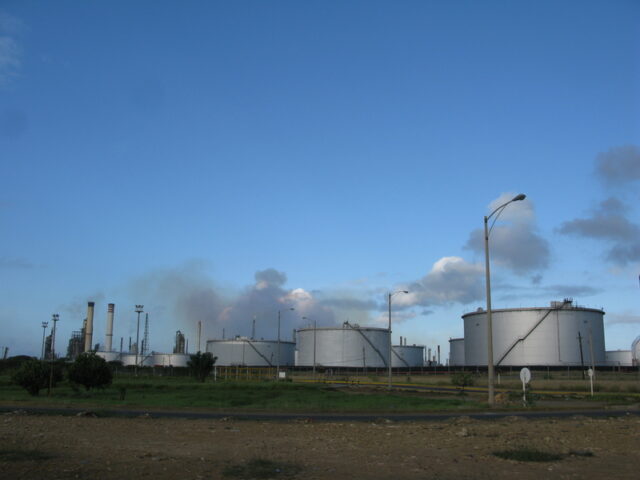
The administration’s strategy extends beyond immediate shipments. The White House is scheduled to meet with top executives from ExxonMobil, Chevron, and ConocoPhillips this Friday to discuss multi-billion dollar investments to rebuild Venezuela’s crumbling oil infrastructure.
President Trump has frequently described the Venezuelan oil sector as a “total bust” under the Maduro regime, noting that production plummeted from 3.5 million barrels per day in 1999 to roughly 1 million today. White House spokesperson Taylor Rogers emphasized that American companies are “ready and willing” to restore the industry. Trump even suggested that the U.S. might subsidize these efforts, stating, “The oil companies will spend it, and then they’ll get reimbursed by us or through revenue.”
As the administration moves to “run” Venezuelan policy, the American public remains deeply divided over the ethics and logistics of the intervention. Recent polling conducted in the days following Maduro’s capture reveals a country split on the use of force and the subsequent “resource-heavy” strategy.
According to a Reuters/Ipsos poll conducted January 4–5, 2026:
- Approval of Removal: 33% of Americans approve of the U.S. military action to remove Maduro, while 34% disapprove and 32% remain unsure.
- Oil Control: The prospect of the U.S. taking control of Venezuelan oil fields is met with skepticism, with 46% opposing the move and only 29% in support.
- Fear of Involvement: 72% of respondents expressed concern that the U.S. will become “too involved” in the situation.
- Motivation: 51% of Americans believe the primary motivation for the strike was to gain access to oil, rather than the administration’s stated goal of curbing drug trafficking (41%).
Partisan divides are stark. YouGov data shows that 65% of Republicans support the military operation, compared to just 11% of Democrats. Furthermore, 60% of Republicans support stationing U.S. troops in Venezuela to oversee the transition, a sentiment shared by only 30% of the general population.
Geopolitical Repercussions
The sudden shift has caused ripples in the global market. Brent oil futures slid 2% following the announcement, as traders anticipated a surge in supply. Meanwhile, the move has drawn sharp criticism from Caracas. Interim President Delcy Rodríguez, while signaling some level of cooperation with Washington, has pushed back against the idea of U.S. “supervision,” stating that her destiny is “determined by God,” not foreign powers.
As the first storage ships prepare to depart for American shores, the Trump administration faces the dual challenge of stabilizing a volatile nation and maintaining domestic support for what some experts are calling a new era of “resource-driven” foreign policy.
News Sources
- Associated Press: Trump says US to get 30 million to 50 million barrels of oil from Venezuela at market price
- The Hindu (via Reuters): Trump says Venezuela will ‘turn over’ 30 to 50 million barrels of oil to U.S.
- The Guardian: Trump says Venezuela has agreed to let him sell 30-50m barrels of oil
- Reuters/Ipsos Poll: Americans have mixed reaction to the U.S. removal of Venezuelan president
- Al Jazeera: Americans evenly split on Maduro’s abduction, poll shows
- The National News: Venezuela to turn over 30-50 million barrels of oil to US, Trump says
Disclaimer
Artificial Intelligence Disclosure & Legal Disclaimer
AI Content Policy.
To provide our readers with timely and comprehensive coverage, South Florida Reporter uses artificial intelligence (AI) to assist in producing certain articles and visual content.
Articles: AI may be used to assist in research, structural drafting, or data analysis. All AI-assisted text is reviewed and edited by our team to ensure accuracy and adherence to our editorial standards.
Images: Any imagery generated or significantly altered by AI is clearly marked with a disclaimer or watermark to distinguish it from traditional photography or editorial illustrations.
General Disclaimer
The information contained in South Florida Reporter is for general information purposes only.
South Florida Reporter assumes no responsibility for errors or omissions in the contents of the Service. In no event shall South Florida Reporter be liable for any special, direct, indirect, consequential, or incidental damages or any damages whatsoever, whether in an action of contract, negligence or other tort, arising out of or in connection with the use of the Service or the contents of the Service.
The Company reserves the right to make additions, deletions, or modifications to the contents of the Service at any time without prior notice. The Company does not warrant that the Service is free of viruses or other harmful components.