CHICAGO — After years of steady price hikes that sent grocery bills soaring, some of the world’s largest food companies are finally blinking. Faced with stagnant growth and “tapped out” consumers, industry leaders are pivoting toward a strategy of affordability to lure shoppers back to the aisles.
According to a recent report by Food Dive, the shift comes as a direct response to declining sales volumes. For much of the post-pandemic era, companies maintained profits by raising prices, even as sales of items began to dip. However, that trend appears to have hit a breaking point.
The Push for Affordability

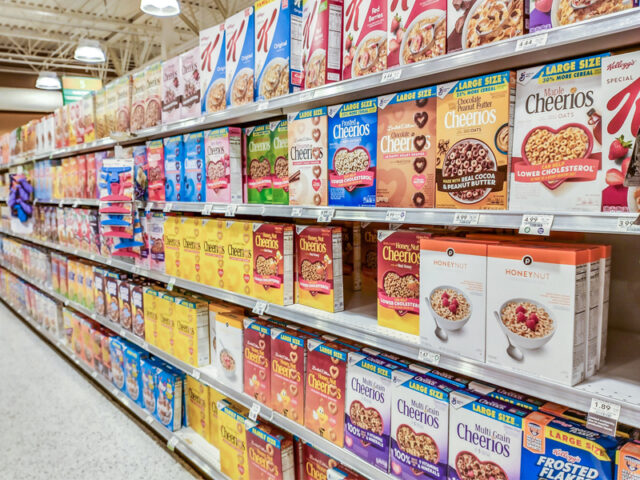
General Mills, the maker of household staples like Cheerios and Nature Valley, is leading the charge. The company recently revealed that it has reduced prices on nearly two-thirds of its North American grocery portfolio. The gamble appears to be paying off; the company reported a subsequent uptick in product volume, suggesting that consumers are ready to buy—if the price is right.
PepsiCo is following a similar path. The snacking and beverage giant saw volumes for its North American snack division drop by 4% and beverages by 3% late last year. In response, CEO Ramon Laguarta told Food Dive that the company sees a “big reset of affordability” as essential, noting that consumers in the U.S. and other Western markets are clearly struggling.
A “Tapped Out” Consumer
The economic pressure on households is palpable. Brian Choi, CEO of The Food Institute, told Food Dive that consumers represent two-thirds of the economy and are currently “tapped out.” This fatigue is especially evident among households earning $100,000 or less, who are increasingly prioritizing discounted items and private-label brands over premium names.
While the USDA’s Economic Research Service forecasts that food-at-home prices will rise by a more modest 2.3% in 2026, the cumulative effect of previous years remains a burden. Specific commodities continue to squeeze budgets; Labor Department data shows that coffee prices have surged 18.8% and ground beef 14.9% over the past year.
Strategic Exceptions
Despite the broader trend toward cuts, the relief is not universal. Some sectors are still battling high input costs, making price drops impossible. For instance, Hershey announced double-digit price increases for 2025 and 2026 due to the sustained high cost of cocoa.
Hershey’s CFO Steven Voskuil noted that the industry is no longer moving in “lockstep” regarding pricing. Instead, companies are becoming more “precise and strategic,” raising prices where supply chain pressures are unavoidable while cutting back on staples to maintain market share.
As the “big reset” begins, the grocery store of 2026 is becoming a primary battleground for consumer loyalty. For shoppers, the news of these strategic price cuts offers a glimmer of hope that the peak of the food inflation crisis may finally be in the rearview mirror.
Disclaimer
Artificial Intelligence Disclosure & Legal Disclaimer
AI Content Policy.
To provide our readers with timely and comprehensive coverage, South Florida Reporter uses artificial intelligence (AI) to assist in producing certain articles and visual content.
Articles: AI may be used to assist in research, structural drafting, or data analysis. All AI-assisted text is reviewed and edited by our team to ensure accuracy and adherence to our editorial standards.
Images: Any imagery generated or significantly altered by AI is clearly marked with a disclaimer or watermark to distinguish it from traditional photography or editorial illustrations.
General Disclaimer
The information contained in South Florida Reporter is for general information purposes only.
South Florida Reporter assumes no responsibility for errors or omissions in the contents of the Service. In no event shall South Florida Reporter be liable for any special, direct, indirect, consequential, or incidental damages or any damages whatsoever, whether in an action of contract, negligence or other tort, arising out of or in connection with the use of the Service or the contents of the Service.
The Company reserves the right to make additions, deletions, or modifications to the contents of the Service at any time without prior notice. The Company does not warrant that the Service is free of viruses or other harmful components.