Florida’s humid climate creates the perfect storm for property odor issues. Whether it’s mold from moisture, lingering pet smells, or something more serious like an unattended death, odors are killing home sales across the state and costing sellers way more than they realize.
The Real Cost of “Just a Smell”
 Here’s what most Florida sellers don’t get: buyers make decisions with their noses first, their eyes second. You can have granite countertops, a renovated kitchen, and a backyard pool. None of it matters if your property smells off.
I’ve seen it happen countless times. A buyer walks in, catches a whiff of something they can’t quite identify, and they’re mentally out the door. They’ll finish the walkthrough to be polite, but the deal’s already dead. Their agent knows it. The listing agent knows it. The only person who doesn’t know it is often the seller who’s convinced the smell isn’t that bad.
Why Florida Properties Are Especially Vulnerable
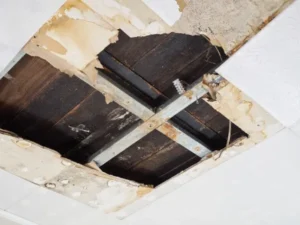
South Florida’s heat and humidity amplify every odor issue. What might go unnoticed in a dry climate becomes overwhelming here. Moisture gets into everything: subflooring, drywall, insulation, HVAC systems. Once odors penetrate porous materials in Florida’s climate, they don’t just go away on their own.

Add in scenarios like hoarding, pet damage, or biological contamination from unattended deaths, and you’ve got problems that run deep. Surface cleaning doesn’t touch it. Air fresheners and scented candles might fool you, but they won’t fool buyers.
What Sellers Try (And Why It Fails)
 The DIY approach almost never works for serious odor issues. I’ve talked to sellers who spent hundreds on enzyme cleaners, ozone machines from Amazon, and every cleaning product at Home Depot. Six months later, they’re still trying to sell a property that won’t move.
Bleach doesn’t eliminate odors: it just creates toxic fumes. Opening windows and running fans only temporarily masks the problem. Painting over contaminated drywall seals the smell in until humidity brings it back out. These shortcuts might buy you a few days, but inspectors and experienced buyers see right through them.
The Hidden Financial Hit
Most sellers focus on the upfront cost of professional remediation. Let’s say proper odor elimination, property restoration, and biohazard cleanup in Florida costs $5,000. That feels like a lot of money to spend before listing. But here’s what happens when you skip it:
Your property sits on the market for months instead of weeks. You drop the price once, twice, maybe three times. Buyers who do make offers come in 10-15% below asking because they know the property has issues. Some will demand you handle the problem anyway, except now you’re negotiating from a position of weakness.
Do the math. On a $400,000 property, a 10% price reduction is $40,000. That $5,000 cleanup suddenly looks like the bargain it actually is.
Why Professional Treatment Makes the Difference
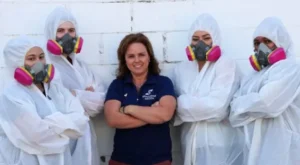 Laura Spaulding, a recognized expert in biohazard remediation, puts it: “Proper cleanup isn’t about appearances: it’s about safety. If contamination isn’t fully removed, it can resurface during inspections or after a buyer moves in.”
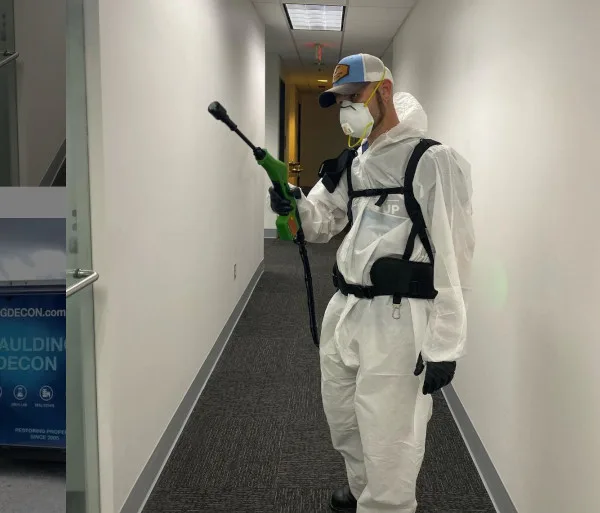
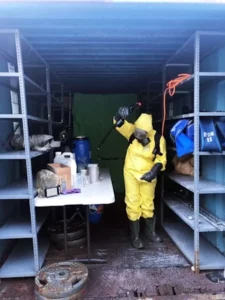
Professional companies like Spaulding Decon – biohazard cleanup use hydroxyl or ozone treatments that permanently eliminate odors at the molecular level. They remove contaminated materials, treat affected areas with industrial-grade solutions, and verify the work meets safety standards. You get documentation proving the job was done correctly, which builds buyer confidence rather than raising red flags.
The Documentation Advantage
When you invest in professional remediation, you’re not just fixing the problem: you’re creating proof that you fixed it. That documentation becomes your best sales tool. Buyers see you took the issue seriously. Their lenders know the property is safe to finance. Appraisers can’t flag it as a concern.
Compare that to the seller who tries to hide odor issues or handles cleanup themselves. When problems surface during inspection, and they almost always do, buyers lose trust in everything else about the property. Deals fall apart even when sellers offer to fix things at that point, because the trust is gone.
What Florida Sellers Should Do
If your property has any odor issues beyond everyday smells, even just cigarette smoke residue, address them before listing. Get a professional assessment. If biological contamination is involved, call certified remediation specialists immediately. Don’t wait. Don’t try shortcuts. Don’t convince yourself the problem isn’t that bad.
The Florida real estate market moves fast when properties are right. Homes with odor issues just sit there, losing value every week. The longer a property stays on the market, the more buyers assume something’s seriously wrong with it: even if the only issue was a smell you could have fixed upfront for a fraction of what you’ll lose in price reductions.
Pay for proper cleanup now, or pay way more in lost equity later. For Florida sellers, it really is that simple.
Disclaimer
Artificial Intelligence Disclosure & Legal Disclaimer
AI Content Policy.
To provide our readers with timely and comprehensive coverage, South Florida Reporter uses artificial intelligence (AI) to assist in producing certain articles and visual content.
Articles: AI may be used to assist in research, structural drafting, or data analysis. All AI-assisted text is reviewed and edited by our team to ensure accuracy and adherence to our editorial standards.
Images: Any imagery generated or significantly altered by AI is clearly marked with a disclaimer or watermark to distinguish it from traditional photography or editorial illustrations.
General Disclaimer
The information contained in South Florida Reporter is for general information purposes only.
South Florida Reporter assumes no responsibility for errors or omissions in the contents of the Service. In no event shall South Florida Reporter be liable for any special, direct, indirect, consequential, or incidental damages or any damages whatsoever, whether in an action of contract, negligence or other tort, arising out of or in connection with the use of the Service or the contents of the Service.
The Company reserves the right to make additions, deletions, or modifications to the contents of the Service at any time without prior notice. The Company does not warrant that the Service is free of viruses or other harmful components.