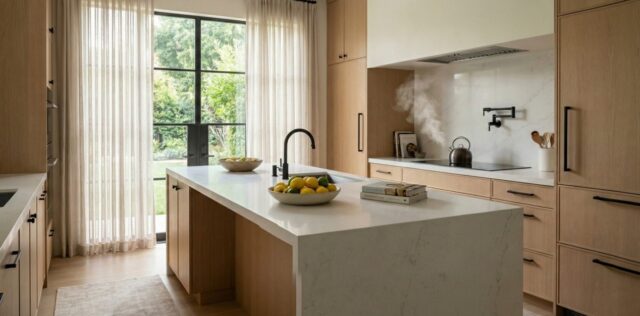
The kitchen has long been described as the heart of the home. In recent years, it has also become the primary driver of property value. For homeowners looking to upgrade their living space, the kitchen represents the single most significant opportunity to improve daily life while securing a solid return on investment. However, executing a renovation that balances high end aesthetics with rigorous functionality requires careful planning. It is not enough to simply replace cabinets and countertops. A successful project requires a deep understanding of workflow, lighting, and structural integration.
In dynamic real estate markets, buyers are becoming increasingly sophisticated. They are looking for spaces that perform on a professional level. They want durable materials, intelligent layouts, and systems that operate silently in the background. Whether you are upgrading a coastal condo or a historic single-family home, the principles of good design remain constant. It is about creating a space where the act of cooking is supported by the architecture rather than hindered by it.
Defining the Workflow Zones
The classic “work triangle” concept, connecting the sink, stove, and refrigerator, has evolved. Modern kitchen design now focuses on “zones.” A well planned kitchen has a distinct prep zone, a cooking zone, a cleaning zone, and a social zone. In many older homes, these functions often overlap, causing congestion and frustration.

For the prep zone, counter space is king. It needs to be positioned near the water source but distinct from the dirty dish pile. The cooking zone requires ventilation that actually works. We are moving away from recirculating fans and toward dedicated exhaust hoods that vent to the exterior. This is critical for maintaining indoor air quality. The social zone, often an island with seating, must be positioned so that guests can interact with the cook without blocking the path to the oven or fridge. Establishing these clear traffic lanes is the first step in any major renovation design.
Lighting as a Functional Tool
In many regions, particularly the Pacific Northwest where natural light can be scarce for distinct seasons, lighting design is paramount. A single overhead fixture is insufficient. A chef inspired kitchen requires layers of light. Ambient lighting provides general illumination, often achieved through recessed cans. Task lighting under cabinets is essential to illuminate the work surface without casting shadows.
Accent lighting adds the emotional layer. This might include soft LED strips in the toe kicks or inside glass front cabinets. When planning a renovation, it is vital to treat lighting as a structural element. It requires early coordination with the electrician to ensure that switches are intuitive and that fixtures are placed to minimize glare. The goal is a room that feels bright and energized in the morning but can transition to a warm, moody atmosphere for evening entertaining.
Materiality and Durability
A kitchen is a workshop. It sees heat, sharp objects, heavy pots, and acidic liquids. The materials chosen must stand up to this abuse while looking beautiful. While marble remains a popular aesthetic choice, it is porous and prone to etching. For homeowners who cook frequently, engineered quartz or sintered stone offers the look of natural stone with superior durability. These materials are non porous, meaning they resist staining and bacterial growth.
Cabinetry must also be built to last. We advocate for marine grade plywood boxes rather than particle board, which can swell with moisture. Hardware should be solid brass or stainless steel, not plated zinc. In the context of a Seattle kitchen remodel, where moisture levels can be higher, selecting materials that remain stable in varying humidity is a technical necessity. Hardwoods like white oak or walnut bring warmth, but they must be properly sealed to endure the environment.
The “Unkitchen” Aesthetic
A growing trend in high end design is the move toward the “unkitchen.” This design philosophy seeks to hide the utilitarian aspects of the room to create a space that feels more like a living area. This involves integrating appliances behind custom panels so the refrigerator and dishwasher disappear into the cabinetry.
It also involves managing countertop clutter. Appliance garages, which are dedicated cabinets with retractable doors, house toasters, coffee makers, and mixers. When the doors are closed, the kitchen looks serene and uncluttered. Large, deep drawers are replacing lower cabinets, allowing for ergonomic storage of heavy pots and plates. This shift requires precise millwork and a high level of craftsmanship to ensure consistent reveals between panels and smooth hardware operation.
Smart Systems and Sustainability
The modern kitchen is a smart kitchen. Faucets that activate with a wave of the hand reduce the spread of germs. Induction cooktops offer precise temperature control and are safer and more energy efficient than gas. Smart ovens can be preheated remotely. However, technology should not be intrusive. The best systems are those that make life easier without requiring a manual to operate.
Sustainability is also a key factor. High efficiency dishwashers and refrigerators reduce water and energy consumption. Allocating space for composting and recycling bins within the cabinetry encourages responsible waste management. A renovation is the perfect time to upgrade the insulation in the exterior walls and install high-performance windows, ensuring the room stays comfortable year-round without excessive heating or cooling.
The Importance of Professional Execution
A kitchen renovation is one of the most complex construction projects a homeowner can undertake. It involves structural framing, plumbing, gas lines, high voltage electrical work, and intricate finish carpentry. Coordinating these trades requires a general contractor with deep experience and organizational discipline.
The design build model, where the design team and the construction team work together from day one, creates the smoothest process. It prevents the common disconnect where a design looks great on paper but is too costly or difficult to build. Homeowners looking to understand the value of this integrated approach can read About Sapir Construction to see how a heritage of craftsmanship and transparency leads to successful outcomes. Trusting a proven team ensures that the investment made in the kitchen pays dividends in both lifestyle and property value for years to come.
Conclusion
Creating a chef inspired kitchen is about more than buying a professional range. It is about thoughtful planning, durable materials, and precise execution. By focusing on workflow, lighting, and the integration of modern systems, homeowners can create a space that is a joy to work in and a centerpiece of the home. It is a transformation that elevates the daily ritual of cooking into something truly special.
Disclaimer
Artificial Intelligence Disclosure & Legal Disclaimer
AI Content Policy.
To provide our readers with timely and comprehensive coverage, South Florida Reporter uses artificial intelligence (AI) to assist in producing certain articles and visual content.
Articles: AI may be used to assist in research, structural drafting, or data analysis. All AI-assisted text is reviewed and edited by our team to ensure accuracy and adherence to our editorial standards.
Images: Any imagery generated or significantly altered by AI is clearly marked with a disclaimer or watermark to distinguish it from traditional photography or editorial illustrations.
General Disclaimer
The information contained in South Florida Reporter is for general information purposes only.
South Florida Reporter assumes no responsibility for errors or omissions in the contents of the Service. In no event shall South Florida Reporter be liable for any special, direct, indirect, consequential, or incidental damages or any damages whatsoever, whether in an action of contract, negligence or other tort, arising out of or in connection with the use of the Service or the contents of the Service.
The Company reserves the right to make additions, deletions, or modifications to the contents of the Service at any time without prior notice. The Company does not warrant that the Service is free of viruses or other harmful components.