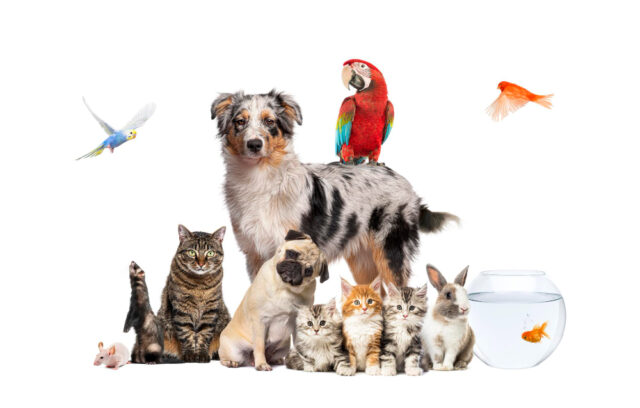
In a legal challenge that has captured the attention of millions of American pet owners, a New York attorney has filed a federal lawsuit against the Internal Revenue Service (IRS), demanding that her dog—and by extension, other companion animals—be reclassified as legal dependents. The case, Reynolds v. Commissioner of Internal Revenue, argues that the current tax code’s refusal to recognize pets as dependents is not only outdated but unconstitutional.
The plaintiff, Amanda Reynolds, filed the suit alongside her co-plaintiff, an eight-year-old golden retriever named Finnegan Mary Reynolds. Reynolds argues that Finnegan meets nearly every criterion for a “qualifying relative” under Section 152 of the Internal Revenue Code. According to the filing, the dog has no independent income, resides exclusively with Reynolds, and requires over $5,000 annually in support for food, shelter, and medical care.
“For all intents and purposes, Finnegan is like a daughter,” Reynolds stated in the complaint. She contends that while the IRS classifies pets as “property”—akin to a toaster or a vehicle—this classification fails to reflect the reality of modern American households, where 97% of owners consider pets to be family members.

The lawsuit leans on the Equal Protection Clause, arguing that the government discriminates against taxpayers who support non-human dependents. Reynolds points out a perceived hypocrisy in the tax code: the IRS already allows deductions for service animals and certain business-related animals (like guard dogs), yet denies similar relief to companion animal owners who bear identical financial burdens.
Legal experts, however, suggest the case faces a steep uphill battle. Magistrate Judge James M. Wicks, overseeing the case in the Eastern District of New York, has already signaled skepticism. He recently paused the discovery process, noting that the IRS has made a “substantial showing” that the case may be dismissed. The primary hurdle is the statutory definition of “individual,” which courts have consistently interpreted as referring strictly to human beings.
If successful, the lawsuit could unlock billions in tax credits, such as the Child Tax Credit or the Credit for Other Dependents, for the 94 million U.S. households that own pets. For now, the case remains a “labor of love” for Reynolds, who insists that her dog’s status as a family member should carry weight in the eyes of the law.
Sources
- The Independent: A woman is suing the IRS to get pets classified as dependents
- Kinship: New Lawsuit Demands the IRS Recognize Pets as Legal Dependents
- Quartz: IRS faces a lawsuit that would reclassify pets as dependents
- KIRO 7 News: New York attorney sues IRS, arguing her golden retriever is a dependent
- Forbes: Lawyer Sues The IRS, Demanding It Recognize Pets As Legal Dependents
Disclaimer
Artificial Intelligence Disclosure & Legal Disclaimer
AI Content Policy.
To provide our readers with timely and comprehensive coverage, South Florida Reporter uses artificial intelligence (AI) to assist in producing certain articles and visual content.
Articles: AI may be used to assist in research, structural drafting, or data analysis. All AI-assisted text is reviewed and edited by our team to ensure accuracy and adherence to our editorial standards.
Images: Any imagery generated or significantly altered by AI is clearly marked with a disclaimer or watermark to distinguish it from traditional photography or editorial illustrations.
General Disclaimer
The information contained in South Florida Reporter is for general information purposes only.
South Florida Reporter assumes no responsibility for errors or omissions in the contents of the Service. In no event shall South Florida Reporter be liable for any special, direct, indirect, consequential, or incidental damages or any damages whatsoever, whether in an action of contract, negligence or other tort, arising out of or in connection with the use of the Service or the contents of the Service.
The Company reserves the right to make additions, deletions, or modifications to the contents of the Service at any time without prior notice. The Company does not warrant that the Service is free of viruses or other harmful components.