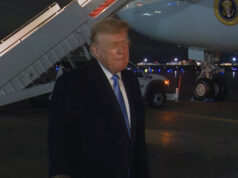
WASHINGTON, D.C. — In a move that marks the most significant shift in federal drug policy in over half a century, President Donald J. Trump signed an executive order on Thursday, December 18, 2025, directing the Department of Justice to expedite the reclassification of marijuana. The order instructs Attorney General Pam Bondi to complete the administrative process of moving cannabis from Schedule I to Schedule III of the Controlled Substances Act (CSA) “in the most expeditious manner.”
The executive action aims to formally recognize the medical utility of cannabis at the federal level, aligning national policy with the 40 states that have already legalized medical marijuana. By moving to Schedule III—a category that includes substances like ketamine and Tylenol with codeine—marijuana will no longer be classified alongside heroin as a drug with “no accepted medical use.”
A Financial Lifeline for the Industry
Beyond the symbolic shift, the order provides a massive “tax holiday” for the multibillion-dollar cannabis industry. Under current law, Section 280E of the Internal Revenue Code prevents businesses handling Schedule I or II substances from deducting standard operating expenses, such as rent and payroll.
Once the rescheduling is finalized, this penalty will vanish, allowing state-licensed dispensaries and cultivators to operate under the same tax rules as any other American business. Analysts suggest this could save the industry billions of dollars annually, potentially lowering consumer prices and stabilizing struggling markets.

Expanding Research and CBD Access
President Trump’s order also focuses heavily on medical research and hemp-derived products. It directs the Department of Health and Human Services (HHS) and the FDA to develop new research models using “real-world evidence” to better understand the long-term effects of cannabis.
Furthermore, the order seeks to resolve the “hemp loophole” by directing the Deputy Chief of Staff for Legislative Affairs to work with Congress on a new regulatory framework for CBD. This includes:
- Establishing an upper limit on milligrams of THC per serving in CBD products.
- Authorizing a pilot program to reimburse some Medicare patients for the cost of full-spectrum CBD products.
- Providing clear guidance for doctors to prescribe cannabis-based treatments for conditions like chronic pain, anorexia, and chemotherapy-related nausea.
Mixed Reactions from Reformers
While industry leaders and medical advocates celebrated the news, some criminal justice reformers argue the move does not go far enough. Organizations like the Marijuana Policy Project (MPP) noted that while rescheduling helps businesses and researchers, it does not officially “legalize” marijuana or end federal arrests for possession.
“This is a significant step toward aligning federal policy with science,” said Nina Patel, senior policy counsel at the ACLU. “However, Congress must still act to deschedule cannabis entirely to ensure justice for communities disproportionately harmed by the war on drugs.”
The rescheduling process still requires a final rulemaking phase by the DEA, but the President’s directive to “fast-track” the timeline suggests the change could be codified within the coming months.
Sources
- White House Fact Sheet: Increasing Medical Marijuana and Cannabidiol Research
- Executive Order: Increasing Medical Marijuana and Cannabidiol Research
- NORML: President Trump Takes Executive Action to Federally Reschedule Marijuana
- Marijuana Policy Project Statement on Rescheduling
- ACLU: Response to Trump’s Announcement
Disclaimer
Artificial Intelligence Disclosure & Legal Disclaimer
AI Content Policy.
To provide our readers with timely and comprehensive coverage, South Florida Reporter uses artificial intelligence (AI) to assist in producing certain articles and visual content.
Articles: AI may be used to assist in research, structural drafting, or data analysis. All AI-assisted text is reviewed and edited by our team to ensure accuracy and adherence to our editorial standards.
Images: Any imagery generated or significantly altered by AI is clearly marked with a disclaimer or watermark to distinguish it from traditional photography or editorial illustrations.
General Disclaimer
The information contained in South Florida Reporter is for general information purposes only.
South Florida Reporter assumes no responsibility for errors or omissions in the contents of the Service. In no event shall South Florida Reporter be liable for any special, direct, indirect, consequential, or incidental damages or any damages whatsoever, whether in an action of contract, negligence or other tort, arising out of or in connection with the use of the Service or the contents of the Service.
The Company reserves the right to make additions, deletions, or modifications to the contents of the Service at any time without prior notice. The Company does not warrant that the Service is free of viruses or other harmful components.