By Tom Marquardt And Patrick Darr
A wine columnist recently named 15 Napa Valley Cabernets as the “finest examples” available. Undoubtedly, they’re heavyweights among elite producers, but they also top the “least affordable” list.

Celebrated for their depth and aging potential, the roster includes Screaming Eagle ($2,474), Harlan Estate ($1,497), Opus One ($462) and Caymus Special Selection ($235). Even Robert Mondavi To Kalon feels like a bargain at $189.
We remember buying Opus One at its $50 launch price in 1980, already the most expensive Napa bottle on the market. Other wineries soon realized consumers would pay premium prices simply to own something their friends couldn’t. No wonder the average Napa cabernet now sells for about $108. Those “high‐end” bottles we paid $25 for in the 1980s now fetch ten times as much.

Are these wines worth it? Collectors say yes—and in some cases we agree—but pulling the cork on a $100+ bottle really calls for a special occasion.
Top‐tier cabernets typically offer multiple layers of fruit, dense structure, full bodies and remarkable longevity. Their grapes come from tiny, perfectly situated and small vineyard lots and age in costly new oak. By contrast, more modestly priced cabs draw fruit from broader appellations, often rely on blends, and see far less new barrel time.
In blind tastings, we’ve poured pricey bottles alongside $30 examples—think The Prisoner—and friends almost always pick the showy, sweet‐fruited, instantly gratifying wine, even though it lacks the depth and aging potential of the pricier ones. High‐tannin wines age beautifully but can taste bitter and unapproachable to newcomers on release. Take solace in that you probably wouldn’t enjoy a $1,000 cabernet, even if your wallet could handle it.
We know suggesting $100+ bottles stretches budgets, but we offer them for those seeking something truly memorable, such as holiday dinners, intimate meals for two, and celebrations with friends. As bottle prices climbed, we shifted focus toward value‐driven wines that over‐deliver. Many of these cost around $50—still an investment, but capable of rivaling wines four times as expensive.
Look to the Rhône Valley (Côtes-du-Rhône, Gigondas), Spain (Rioja, Penedès, Jumilla), Chile and Argentina for serious yet affordable wines. Don’t waste money on wine you don’t understand or enjoy. If $20–$30 is your sweet spot, stick there but leave room for an occasional exception.
We’ll continue to recommend splurge‐worthy bottles for special occasions, and we’re always hunting for budget gems too. If you discover one, let us know.
Meanwhile, here are a few luxurious red wines and a few bargains for that special dinner:
Chappellet Signature Cabernet Sauvignon 2022 ($95). You can count on any wine from this well-respected producer. It is a blend of many blocks with specific clone and rootstock combinations. Petit verdot, malbec and merlot make up 18 percent of the blend.
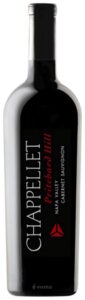
The Chappellet Pritchard Hill Cabernet Sauvignon ($325) is the ultimate Napa cabernet sauvignon from a very special and exclusive site. It is every bit as good (if not better) than the Screaming Eagle for thousands more. Winemaker Phillip Corallo-Titus draws from 40 distinct blocks at various elevations. Blackberry, violet and cedar aromas mingle with dark berry flavors with hints of anise and mocha. Big tannins make this a keeper.
Sullivan Coeur de Vigne Napa Valley Cabernet Sauvignon 2022 ($95). This classic Napa wine from the producer’s Rutherford estate has good structure with firm tannins and body. Blueberry and plum notes with a touch of forest floor. Merlot, petit verdot and cabernet franc joins the cabernet sauvignon to create a multi-dimensional wine.
2022 Spottswoode Estate Cabernet Sauvignon ($285). With an early dedication or organic farming, this producer has been turning out winner after winner. Using grapes from a vineyard planted to grapes since 1882, the estate’s Cabernet Sauvignon comes from a vintage hit by a drought that lowered its yield by 30 percent. But careful attention to the growing season has yielded a spectacular wine with amazing depth. Floral nose with strawberry flavors and hints of spice and cocoa powder. Big tannins.
The 10 most expensive wines from Bordeaux range from $800 to $4,235—a similar range of prices found in Napa Valley. Still, most Bordeaux wines are far less expensive than the wines from Burgundy. There are bargains to be found in Bordeaux.
Here are a few we recommend:
Madame de Beaucaillou 2022 ($32). We have enjoyed this wine from the Left Bank for several vintages. Paying homage to Monique Borie, mother of the Chateau Ducru-Beaucaillou estate’s owner, the wine has cherry and plum flavors, ripe tannins and good balance.
Domaines Comte de Malet Roquefort Chapelle d’Alienor Bordeaux Superieur 2022 ($17). From Saint-Emillion, this blend of merlot and cabernet franc checks off the boxes for a basic Bordeaux wine. Ripe, dark fruit with generous aromas and chalky tannins.
Château La Grave Figeac 2022 ($55). This grand cru from Saint-Emilion has wonderful black cherry and plum flavors with a dash of baking spices and lavender aromas. Medium body with merlot taking the lead for this blend.
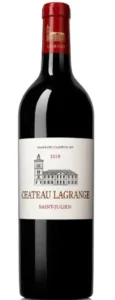
Château Lagrange 2018 ($55-75). This big and rich wine from Saint-Julien has layers of dark fruit flavors, supple tannins, violet aromas and hints of pencil lead and cedar. It is a wine that will do well for another decade but is showing very well now.
Wine picks
BenMarco Malbec 2022 ($20). We can’t say enough about this delicious malbec from Susana Balbo. Sourced from Argentina’s Valle de Uco at 3,640 feet in elevation, the wine reveals generous violet, blackberry, and herbal aromas with black cherry and balsamic flavors. Its firm tannins make it an inexpensive wine to pair with beef.
Oberon Los Carneros Chardonnay 2023 ($22). Quite a deal for a chardonnay as generous in fruit flavors as this one. Richly textured with pear and apple flavors.
LAN Gran Reserva Rioja 2017 ($25). You would be hard-pressed to find a better deal than this tasty Rioja. A little mazuelo is added to the tempranillo to create a fruit-forward wine. It spent 25 months in oak and 36 months in bottle before it was released, so it had time for the wine to come together in a juicy package.
Disclaimer
Artificial Intelligence Disclosure & Legal Disclaimer
AI Content Policy.
To provide our readers with timely and comprehensive coverage, South Florida Reporter uses artificial intelligence (AI) to assist in producing certain articles and visual content.
Articles: AI may be used to assist in research, structural drafting, or data analysis. All AI-assisted text is reviewed and edited by our team to ensure accuracy and adherence to our editorial standards.
Images: Any imagery generated or significantly altered by AI is clearly marked with a disclaimer or watermark to distinguish it from traditional photography or editorial illustrations.
General Disclaimer
The information contained in South Florida Reporter is for general information purposes only.
South Florida Reporter assumes no responsibility for errors or omissions in the contents of the Service. In no event shall South Florida Reporter be liable for any special, direct, indirect, consequential, or incidental damages or any damages whatsoever, whether in an action of contract, negligence or other tort, arising out of or in connection with the use of the Service or the contents of the Service.
The Company reserves the right to make additions, deletions, or modifications to the contents of the Service at any time without prior notice. The Company does not warrant that the Service is free of viruses or other harmful components.