Written by Tim Newman — Fact checked by Jennifer Chesak, MSJ
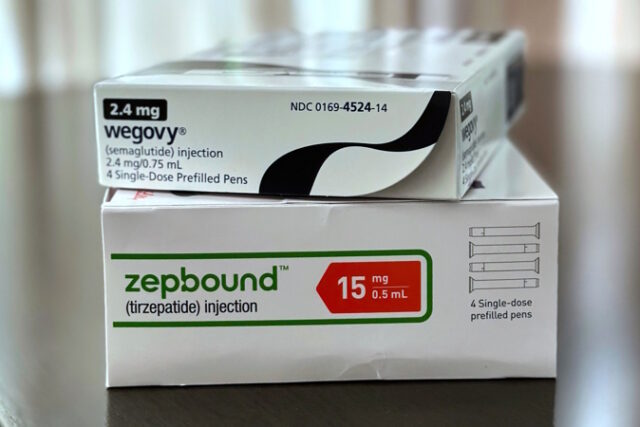
GLP-1 agonists have taken the pharmaceutical world by storm. The active ingredient, semaglutide, is used in the now-famous Ozempic and Wegovy medications for diabetes and weight loss.
Already, these drugs have helped millions of people manage their weight and treat type 2 diabetes.
But could they also help tackle Alzheimer’s disease? Recent clinical trials focused on one of Novo Nordisk’s older diabetes medications called Rybelsus.

Because ongoing efforts to slow the progression of Alzheimer’s have largely been disappointing, even a minor success would provide a rare glimmer of hope for people in the early stages of the condition.
What has weight loss got to do with Alzheimer’s?
There is a complex relationship between obesity, diabetes (particularly insulin resistance), Alzheimer’s, and GLP-1 agonists. They are more interrelated than they might at first seem.
In fact, multiple lines of evidence show how these conditions are deeply linked. For instance:
- people with obesity are more likely to develop type 2 diabetes
- people with obesity are at an increased risk of developing Alzheimer’s later in life
- people with type 2 diabetes are also more likely to develop Alzheimer’s disease
- Alzheimer’s disease is associated with insulin resistance in the brain, with some scientists referring to Alzheimer’s as type 3 diabetes
- obesity, type 2 diabetes, and Alzheimer’s all involve inflammation, and GLP-1 agonists have an anti-inflammatory effect
- studies in animal models of dementia have shown that GLP-1 agonists can protect rats’ brains from damage.
GLP-1 agonists and Alzheimer’s: The Evoke trials
Because semaglutide can successfully treat both type 2 diabetes and obesity, it makes sense to investigate whether it might also slow the progression of Alzheimer’s disease.
The recent studies, called Evoke and Evoke+, were phase 3 trials, meaning that they were designed to test whether a drug is safe, beneficial, and effective in humans.
The researchers recruited people with mild cognitive impairment or mild dementia due to Alzheimer’s disease. In total, 3,808 participants took either semaglutide or a placebo for 156 weeks.
Can GLP-1s actually protect the human brain?
Despite the potential, the trials did not reach the conclusions the scientists were hoping for.
On Monday, 24th November, Novo Nordisk published a press release, explaining that “the Evoke and Evoke+ trials did not confirm superiority of semaglutide versus placebo in the reduction of progression of Alzheimer’s disease.”
Although the researchers did report significant reductions in biomarkers associated with Alzheimer’s, there was no reduction in disease progression in either trial. This was the key outcome they were shooting for.
Initially, they had planned to continue the study for a further year, but because of the lack of positive results, they cancelled the extension.
Although one should never pin too much hope on drug trials to treat Alzheimer’s, as so much earlier work has failed, there is widespread disappointment at the findings.
“Today’s disappointing announcement on semaglutide will come as a blow for people affected by Alzheimer’s,” said Susan Kohlhaas, PhD, Executive Director of Research and Partnerships at Alzheimer’s Research UK, in a press release.
“These trial results are another reminder that Alzheimer’s is driven by several different biological processes. No single approach is likely to be enough. The field now needs to focus on understanding those processes in much greater detail and developing treatments that can be used together to tackle the disease from multiple angles.” – Susan Kohlhaas, PhD
Experts on trial findings: Unsurprised, disappointed but not down
Experts who were not involved in the trials spoke to Medical News Today about their feelings concerning the findings.
“I was hopeful that it would be positive, but I’m not surprised that it’s not,” said Zaldy Tan, MD, MPH, director of the Bernard and Maxine Platzer Lynn Family Memory and Healthy Aging Program at Cedars-Sinai Medical Center.
“While GLP-1s have been proposed to exert beneficial effects on inflammation, synaptic preservation, and microglia/astroglia function,” Tan explained, “it has very limited ability to cross the blood-brain barrier, where the reduction of insulin resistance in the central nervous system is really needed.”
In line with these sentiments, Christopher U. Missling, PhD, MS, MBA, president and CEO of Anavex Life Sciences, said that the result “wasn’t entirely surprising to many in the field, though it was disappointing given the initial optimism.“
“Here’s why Alzheimer’s disease is complex,” said Missling.
Elaborating, he added that Alzheimer’s is not just a disease of inflammation and metabolism. It involves a wide range of pathological processes. “GLP-1 agonists target metabolic and inflammatory pathways, but that alone may not be enough to alter clinical progression,” he explained.
In agreement, Matt Kaeberlein, PhD, professor of pathology at UW Medicine and CEO of Optispan said: “It’s disappointing but not particularly surprising that Novo Nordisk’s trials failed to show a slowing of Alzheimer’s progression with semaglutide. Expecting a single drug to meaningfully alter the course of Alzheimer’s once cognitive decline is underway is an extraordinarily high bar.”
However, Kaeberlein believed there may still be hope. “I wouldn’t interpret this result as evidence that GLP-1 agonists are ineffective for Alzheimer’s disease more broadly,” he told us.
Tan was on the same page, telling MNT that:
“While these results unfortunately highlight the complexity of addressing Alzheimer’s pathology, it has been demonstrated that neuroinflammation and metabolic regulation are valid treatment approaches. While we await more detailed results that may impact further research of semaglutide itself, it is important to investigate therapies that act through these multiple, converging biological pathways.”
On continuing this line of research, Missling said that “more data from the trials is expected at future Alzheimer’s conferences, and other GLP-1 or dual agonists might still be explored, possibly at higher doses or in preventive trials.”
Kaeberlein also remained upbeat. He told MNT that he ”hopes these findings don’t dampen enthusiasm for the broader line of inquiry.”
In particular, he told us that he is “encouraged by the potential of GLP-1 agonists when combined with lifestyle modification as a preventive strategy to reduce dementia risk before symptoms emerge, where the biology may be far more modifiable.”
Although the Evoke studies, on paper, failed, there is still hope. Research will continue. Watch this space, researchers say.
Disclaimer
Artificial Intelligence Disclosure & Legal Disclaimer
AI Content Policy.
To provide our readers with timely and comprehensive coverage, South Florida Reporter uses artificial intelligence (AI) to assist in producing certain articles and visual content.
Articles: AI may be used to assist in research, structural drafting, or data analysis. All AI-assisted text is reviewed and edited by our team to ensure accuracy and adherence to our editorial standards.
Images: Any imagery generated or significantly altered by AI is clearly marked with a disclaimer or watermark to distinguish it from traditional photography or editorial illustrations.
General Disclaimer
The information contained in South Florida Reporter is for general information purposes only.
South Florida Reporter assumes no responsibility for errors or omissions in the contents of the Service. In no event shall South Florida Reporter be liable for any special, direct, indirect, consequential, or incidental damages or any damages whatsoever, whether in an action of contract, negligence or other tort, arising out of or in connection with the use of the Service or the contents of the Service.
The Company reserves the right to make additions, deletions, or modifications to the contents of the Service at any time without prior notice. The Company does not warrant that the Service is free of viruses or other harmful components.