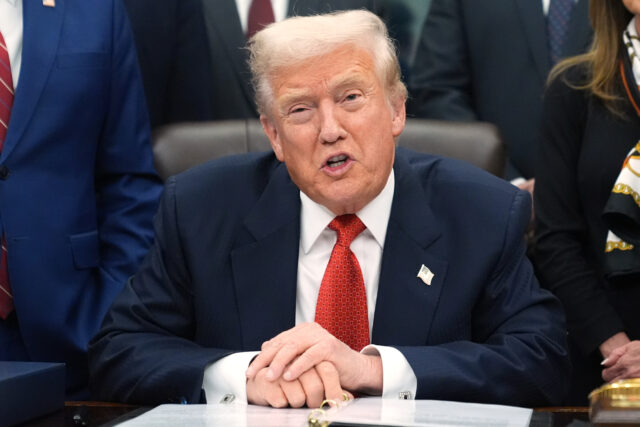
In a dramatic shift in trade policy, President Donald Trump has signed an executive order that eliminates tariffs on a broad range of imported goods, including beef, coffee, and bananas, in response to mounting pressure over high food prices.
The move comes after recent state and local elections in which voters cited cost-of-living concerns—especially grocery bills—as a key factor in Democratic gains. In response, the Trump administration says it is targeting items that are not produced in sufficient quantities domestically and opening trade frameworks with four Latin American countries: Argentina, Ecuador, Guatemala, and El Salvador.
Under the new policy, the United States will exempt many food products from previously imposed “reciprocal levies”—a sweeping tariff regime introduced earlier this year. Among the specific items identified: beef from Argentina may be exempted from the U.S. 10 percent tariff; coffee and bananas from Ecuador are flagged for immediate relief; and a range of fruits, nuts, and other tropical produce will be included.
A senior administration official explained that while tariffs on most goods from these partner countries will remain (10 percent for Argentina, Guatemala, and El Salvador; 15 percent for Ecuador), select items not produced in the U.S. will receive immediate relief.

For beef, the policy reversal is especially notable. Historically, beef has been produced in large measure domestically, and the exemption suggests the government is prioritizing price relief over insulating U.S. production entirely. Some analysts note this may signal upcoming shifts in agricultural trade policy.
The move also carries political overtones: the administration frames the tariff rollback as part of a broader affordability agenda, attempting to quell voter concerns that elevated food costs are hurting household budgets. “A lot of these prices of coffee and cocoa and some of these other things have been turning up for a long time,” a senior official said.
Still, the step has drawn mixed reactions. Critics argue that the policy represents an admission that the earlier tariff regime helped drive inflation. At the same time, supporters say it responds to economic realities and global supply constraints (particularly for goods like coffee and bananas not grown at sufficient scale in the U.S.).
Industry analysts suggest that companies dependent on imports—such as coffee roasters or banana distributors—stand to benefit from reduced input costs, potentially passing savings on to consumers. The question remains, however, whether retailers will in fact lower prices or simply improve margins.
On the diplomatic front, the framework agreements with Argentina, Ecuador, Guatemala, and El Salvador also include commitments around digital-services taxation, trade access, and other non-tariff barriers—a sign that the policy is about more than just food prices.
Looking ahead, the administration has indicated that further tariff relief may be considered for other imported foods and agricultural goods such as citrus fruit, beef from additional countries, and nuts, depending on how price trends evolve.
In sum, the tariff rollback reflects a pivot from a broad protectionist policy towards a more selective approach aimed at addressing cost pressures for consumers. Whether this shift will deliver meaningful relief at the grocery checkout remains to be seen—but for now, it signals that the White House is listening to the economic frustrations of voters.
Sources:
Disclaimer
Artificial Intelligence Disclosure & Legal Disclaimer
AI Content Policy.
To provide our readers with timely and comprehensive coverage, South Florida Reporter uses artificial intelligence (AI) to assist in producing certain articles and visual content.
Articles: AI may be used to assist in research, structural drafting, or data analysis. All AI-assisted text is reviewed and edited by our team to ensure accuracy and adherence to our editorial standards.
Images: Any imagery generated or significantly altered by AI is clearly marked with a disclaimer or watermark to distinguish it from traditional photography or editorial illustrations.
General Disclaimer
The information contained in South Florida Reporter is for general information purposes only.
South Florida Reporter assumes no responsibility for errors or omissions in the contents of the Service. In no event shall South Florida Reporter be liable for any special, direct, indirect, consequential, or incidental damages or any damages whatsoever, whether in an action of contract, negligence or other tort, arising out of or in connection with the use of the Service or the contents of the Service.
The Company reserves the right to make additions, deletions, or modifications to the contents of the Service at any time without prior notice. The Company does not warrant that the Service is free of viruses or other harmful components.