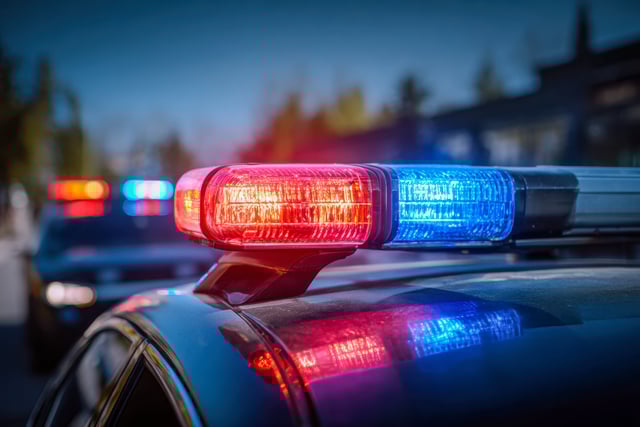
Across several U.S. jurisdictions, police departments are shifting into a new mode of visibility by equipping squad cars with so-called “cruise lights” — solid, non-flashing red and blue LEDs that remain active while the vehicle is simply on patrol.
One prominent example is the Hillsborough County Sheriff’s Office (Florida), which began a trial of cruise lights in early 2020, noting the lights are “dimmer than emergency lights … installed so our deputies are more visible.” Similarly, the Bradenton Police Department announced in August 2024 that its patrol vehicles would now use cruise lights city-wide, clarifying that “cruise lights do not signify an emergency.”
The goal is simple: elevate the police presence, deter criminal activity, and enhance community comfort. From a driver’s perspective, confusion sometimes ensues — one report noted that some motorists, seeing solid red-and-blue lights, assumed they needed to pull over, when in fact no action was required.
According to law-enforcement commentary, the visual cue from these lights signals “we are here” rather than “you must stop.” Departments emphasise that only flashing lights paired with sirens signify an active emergency or traffic stop.

While definitive statistical proof of reduced crime remains limited, early internal studies suggest promising trends in vehicle thefts and burglaries during cruise-light deployment. As community policing strategies evolve, mission leaders say successful implementation hinges on public education so motorists understand how to respond.
In short: if you’re driving and spot a marked police car with solid red-and-blue roof lights on, relax — it’s likely routine patrol, not an urgent stop.
Here’s what national-level and rigorous research tells us about the efficacy of “cruise lights” (steady, non-flashing patrol vehicle lights) in increasing police visibility and deterring crime:
📊 Key Findings
- A pilot study by BetaGov (NYU’s applied research initiative) in three Connecticut police departments (towns of Branford, Darien and New Canaan) ran a randomized trial of patrol vehicles with cruise lights on versus off. On nights when lights were on:
- Vehicle thefts were 44% lower (10 vs. 18)
- Vehicle burglaries were 16% lower (36 vs. 43)
- Motor vehicle accidents were 26% lower (20 vs. 27)
- Traffic stops were significantly fewer (428 vs. 489).
- However, the reductions in thefts, burglaries and accidents did not reach statistical significance.
- The report notes this was the first such evaluation and the sample was small; more power was needed.
- In another study, the Vallejo Police Department (California) partnered with the National Institute of Justice (NIJ) to test the effect of flashing police lights (code-2 “lights on” patrols) on auto crime in a shopping-center hotspot. They found:
- Zero auto thefts during “lights-on” days vs. 4 during “lights-off” days (p = 0.03)
- 50% reduction in total auto crimes (6 vs. 12) though p = 0.07 (not quite statistically significant)
- A broader technical report by the U.S. Fire Administration (USFA) and the International Fire Service Training Association (IFSTA) noted that for emergency-vehicles in the U.S., there is very limited research on how different visibility treatments (lights, markings) affect driver behavior and traffic safety.
✅ Summary
- The concept of using steady/low-intensity patrol lights to boost visibility has shown promising signals: reductions in thefts, burglaries and accidents have been observed in pilot studies.
- However — the evidence is not yet robust: many findings did not reach statistical significance, and sample sizes/trial durations have been modest.
- Key limitations: small scale, short timeframes, focus on specific locales/hot-spots; lack of generalizable national data across many jurisdictions.
🔍 Implications for Policy & Practice
- Agencies might reasonably adopt cruise-lights as part of a visibility/deterrence strategy, but they should treat this as experimental, measure outcomes carefully, and not assume automatic crime reductions.
- Public education is important so drivers understand what steady lights mean (i.e., presence only, not a traffic stop). Some confusion has been reported when drivers see lights and assume they must pull over.
- More research is needed: larger-scale randomized trials, across diverse jurisdictions, over longer durations, to test whether the visibility effect holds and whether unintended consequences arise.
📌 Conclusion
While cruise lights appear to offer a low-cost tool for enhancing police presence and possibly deterring auto‐related crimes, the national evidence base remains nascent. Police departments and policymakers should consider them one component of broader crime-prevention/visibility strategies — not a standalone silver bullet.
Sources & links:
- Ultra Bright Lightz
- Bradenton Police Department
- HCSO
- Engage Fairfax
- MotorBiscuit
- Tampa Bay 28 (WFTS)
- betagov.org
- National Institute of Justice
- U.S. Fire Administration
Disclaimer
Artificial Intelligence Disclosure & Legal Disclaimer
AI Content Policy.
To provide our readers with timely and comprehensive coverage, South Florida Reporter uses artificial intelligence (AI) to assist in producing certain articles and visual content.
Articles: AI may be used to assist in research, structural drafting, or data analysis. All AI-assisted text is reviewed and edited by our team to ensure accuracy and adherence to our editorial standards.
Images: Any imagery generated or significantly altered by AI is clearly marked with a disclaimer or watermark to distinguish it from traditional photography or editorial illustrations.
General Disclaimer
The information contained in South Florida Reporter is for general information purposes only.
South Florida Reporter assumes no responsibility for errors or omissions in the contents of the Service. In no event shall South Florida Reporter be liable for any special, direct, indirect, consequential, or incidental damages or any damages whatsoever, whether in an action of contract, negligence or other tort, arising out of or in connection with the use of the Service or the contents of the Service.
The Company reserves the right to make additions, deletions, or modifications to the contents of the Service at any time without prior notice. The Company does not warrant that the Service is free of viruses or other harmful components.