Mayo Clinic researchers have developed an artificial intelligence (AI) algorithm that can identify obstructive sleep apnea (OSA) using the results from an electrocardiogram (ECG) – a common heart test. The innovation could make it faster, cheaper, and easier to spot sleep apnea, particularly in women, who are often underdiagnosed.
A common but underrecognized condition
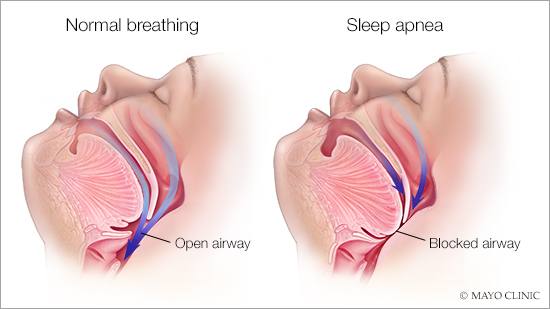
OSA affects more than 936 million adults ages 30-69 worldwide and poses significant cardiovascular risks. People with OSA experience repeated episodes of upper airway collapse or blockage during sleep. This collapse causes breathing to stop or become shallow repeatedly, which often leads to loud snoring and gasping. Despite its prevalence, it often goes undiagnosed.

“Obstructive sleep apnea or OSA is a highly prevalent disease with important cardiovascular consequences,” says Virend Somers, M.D., Ph.D., Alice Sheets Marriott Professor of Cardiovascular Medicine and senior author of the study published in JACC: Advances. “OSA affects the heart to the point where AI algorithms can detect the OSA signature from the ECG, which in essence is a representation of the electrical activity of the heart muscle cells,” Dr. Somers adds.
AI model shows strong performance — especially for women
In the study, the researchers used AI algorithms to review the 12-lead electrocardiogram (ECG) test results of 11,299 patients at Mayo Clinic who had undergone the test along with sleep evaluations. More than 7,000 of them had a known diagnosis of OSA, and 4,000 were controls.
“The most surprising finding was the increased visibility on the ECG of OSA in the females compared to the males, even though the OSA severity was less in the females,” says Dr. Somers.
“This is relevant since emerging data consistently suggest that females have a greater relative likelihood of suffering the cardiovascular consequences of OSA, even if their OSA may be considered ‘milder’ by standard diagnostic criteria,” he adds.
The test also strongly suggests women may suffer more damage to their heart muscle cells from OSA, Dr. Somers says.
Dr. Somers underscores that this approach may have the potential to evaluate whether a given OSA treatment may be able to reduce a patient’s cardiovascular risk.
Review the study for a complete list of authors, disclosures and funding.
Disclaimer
Artificial Intelligence Disclosure & Legal Disclaimer
AI Content Policy.
To provide our readers with timely and comprehensive coverage, South Florida Reporter uses artificial intelligence (AI) to assist in producing certain articles and visual content.
Articles: AI may be used to assist in research, structural drafting, or data analysis. All AI-assisted text is reviewed and edited by our team to ensure accuracy and adherence to our editorial standards.
Images: Any imagery generated or significantly altered by AI is clearly marked with a disclaimer or watermark to distinguish it from traditional photography or editorial illustrations.
General Disclaimer
The information contained in South Florida Reporter is for general information purposes only.
South Florida Reporter assumes no responsibility for errors or omissions in the contents of the Service. In no event shall South Florida Reporter be liable for any special, direct, indirect, consequential, or incidental damages or any damages whatsoever, whether in an action of contract, negligence or other tort, arising out of or in connection with the use of the Service or the contents of the Service.
The Company reserves the right to make additions, deletions, or modifications to the contents of the Service at any time without prior notice. The Company does not warrant that the Service is free of viruses or other harmful components.