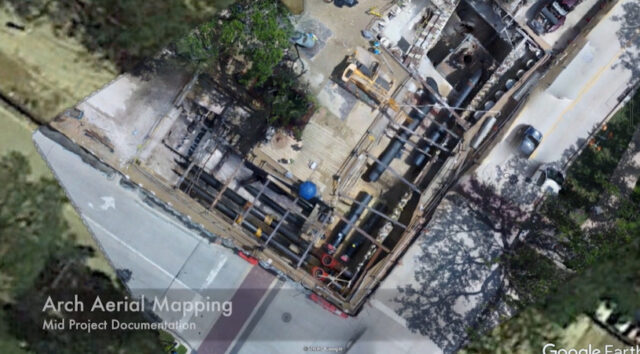
The construction industry has always focused on efficiency and cost control. As projects grow in size and complexity, precise data becomes even more important. Aerial mapping services provide innovative solutions, allowing teams to collect accurate terrain information without the usual labor and time demands. Aerial technology helps construction teams refine planning and execution while keeping budgets under control.
Aerial mapping streamlines operations and introduces new ways to manage projects. High-quality visual data helps teams spot potential issues early, making resource allocation more efficient and reducing waste. Using these services could be a key step toward better efficiency and cost savings in construction.
Eliminating Costly Surveying Errors with High-Precision Aerial Mapping
High-precision aerial mapping services provide real-time topographical data, detecting terrain irregularities before they turn into expensive problems. Identifying these issues early prevents costly design changes later in the project, helping to keep budgets intact. Reducing reliance on traditional manual surveys also leads to more accurate data, lowering the risk of costly errors. LiDAR-equipped drones can capture elevation details with extreme precision, providing construction teams with highly detailed 3D terrain models for better decision-making.
Automated volumetric calculations improve the accuracy of earthwork estimates. This helps refine project bids with precise forecasts and gives teams more confidence in financial planning. Adopting aerial mapping could change how construction teams manage projects, leading to better long-term financial stability.

Optimizing Material Management with Aerial Mapping
Aerial mapping also improves material management by providing essential geospatial data. It helps teams allocate materials more effectively and spot discrepancies between planned and actual usage. Catching these inconsistencies early prevents unnecessary purchases, reducing waste and controlling costs. For instance, aerial mapping can highlight unexpected shifts in stockpile volumes, allowing teams to adjust orders before shortages or surpluses affect the project timeline.
Integrating aerial data with Building Information Modeling (BIM) systems creates a more responsive way to track stockpiles and material use. This combination helps cut down on rework, lowering financial strain. Reviewing historical aerial data can also refine future procurement strategies, improving budgeting and resource planning.
Cutting Labor Expenses by Automating Site Monitoring and Inspections
High-resolution aerial imagery transforms site monitoring by offering detailed overviews that replace time-consuming manual inspections. Drone-based progress tracking allows teams to collect visual data quickly, reducing the need for extra workers on-site. This shift not only cuts labor costs but also speeds up regulatory compliance through fast, detailed reports.
Aerial assessments help teams spot potential problems early, preventing delays that can stall projects. Skilled workers can then focus on higher-priority tasks instead of repetitive inspections. Using aerial technology streamlines processes, creating new efficiencies that contribute to overall project success. Thermal imaging from drones can also detect hidden structural weaknesses, allowing for early intervention before minor issues escalate.
Lowering Equipment and Machinery Costs through Efficient Deployment
Aerial tracking improves how construction teams manage machinery. Real-time data reveals usage patterns, helping teams avoid both underuse and overuse. This level of monitoring cuts down on fuel costs and prevents unnecessary equipment movement. Drone surveillance can identify idle machinery that could be reassigned to high-demand areas, preventing costly downtime and improving overall efficiency.
Mapping optimal routes based on aerial evaluations improves machinery deployment, saving time and resources. Site condition assessments also help teams schedule maintenance and avoid costly relocations caused by unexpected obstacles. Regular aerial checks extend machinery lifespan, reducing repair costs and lowering the risk of unplanned hazards on-site.
Minimizing Project Delays and Financial Penalties with Predictive Aerial Analytics
Real-time aerial updates help teams identify schedule risks before they escalate. Continuous site tracking keeps actual progress aligned with projections, reducing the risk of budget overruns. Staying informed allows for proactive decision-making, keeping projects on track and finances in check.
Aerial-based workflow analysis also strengthens coordination between contractors by improving communication and task clarity. Predictive assessments of terrain and drainage aid in planning, helping to mitigate weather-related delays. Regular aerial monitoring can also support compliance, reducing the likelihood of regulatory fines.
Aerial mapping makes construction projects smoother, faster, and cheaper. It helps teams catch terrain problems early, so they don’t waste money on last-minute fixes. Better tracking of materials means fewer surprises and less overspending. Drones replace slow, costly manual inspections, cutting labor costs while keeping projects on schedule.
Real-time data helps teams plan smarter, avoiding delays and expensive mistakes. Predictive mapping even helps with weather-related risks and compliance issues. Bringing this technology into construction means better budgeting, less waste, and fewer headaches. It’s a simple way to work smarter and save money on every project.
Disclaimer
Artificial Intelligence Disclosure & Legal Disclaimer
AI Content Policy.
To provide our readers with timely and comprehensive coverage, South Florida Reporter uses artificial intelligence (AI) to assist in producing certain articles and visual content.
Articles: AI may be used to assist in research, structural drafting, or data analysis. All AI-assisted text is reviewed and edited by our team to ensure accuracy and adherence to our editorial standards.
Images: Any imagery generated or significantly altered by AI is clearly marked with a disclaimer or watermark to distinguish it from traditional photography or editorial illustrations.
General Disclaimer
The information contained in South Florida Reporter is for general information purposes only.
South Florida Reporter assumes no responsibility for errors or omissions in the contents of the Service. In no event shall South Florida Reporter be liable for any special, direct, indirect, consequential, or incidental damages or any damages whatsoever, whether in an action of contract, negligence or other tort, arising out of or in connection with the use of the Service or the contents of the Service.
The Company reserves the right to make additions, deletions, or modifications to the contents of the Service at any time without prior notice. The Company does not warrant that the Service is free of viruses or other harmful components.