If you still have the “it’ll never happen to me” perspective on fraud, here’s a stat that might persuade you to change your view: ATM card skimming incidents increased 546% from 2014 to 2015.
That figure comes from financial analytics company FICO and its FICO Card Alert Service software, which is designed to detect fraud resulting from things like debit and credit card skimming.
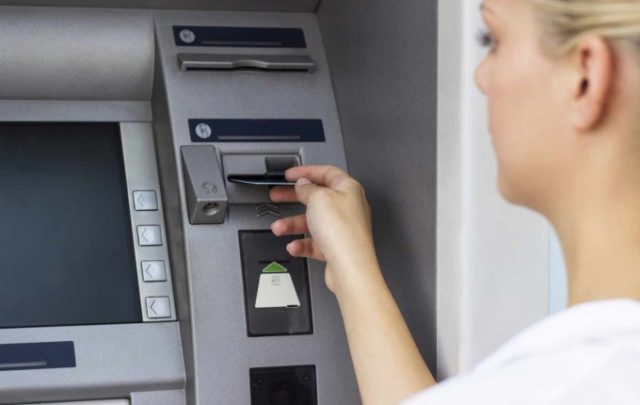
‘ATM skimming‘ is defined as a type of fraud which occurs when an ATM is compromised by a skimming device, a card reader which can be disguised to look like a part of the machine. The card reader saves the users‘ card number and pin code, which is then replicated into a counterfeit copy for theft.
Unless you want to go to a physical bank branch, wait in line and work with a teller to make a withdrawal every time you want cash, you’re probably going to need to use an ATM occasionally. So, if you ever use an ATM, as many Americans do on a regular basis, you’re at risk for having your debit card information stolen. That, in turn, makes the money in your bank account vulnerable, which is problematic, given that you probably plan to use that money to pay bills, buy necessities, make loan payments and do anything else a person with a checking account does.

 There’s not much you can do to guarantee you won’t ever fall victim to ATM skimming, other than not using ATMs, but there are ways you can manage the damage fraud causes and minimize your risk of becoming a victim in the first place. FICO reports that 60% of all skimming incidents occurred at non-bank ATMs — you might want to avoid using those. Some banks and ATMs are testing various technologies that allow account holders to withdraw money without using their cards, so you might want to see if that’s an option for you.
Upgrading to an EMV chip-enabled debit card — if your bank has not already provided one — can help, too, since the chips have a dynamic code (unlike traditional magnetic stripes) designed to make counterfeiting more difficult. In fact, the spike in card fraud could be the “last hurrah” before EMV adoption becomes more widespread.
“As the U.S. approaches chip adoption the criminals are taking this opportunity to perpetrate as much card present counterfeit fraud as possible before it is no longer viable for them to do so,” FICO said in a blog post when it first reported an uptick last May.
Still, regardless of how you get your cash, it’s a good idea to regularly monitor your bank accounts for signs of unauthorized activity and set up fraud alerts. That goes for all sorts of accounts — credit, debit, savings, etc. — because it’s important to your financial health and credit standing that your financial information is accurate.
You can use your credit reports and scores as a way to monitor for unusual account activity (a sign of identity theft), too. (You can can do so by viewing your free credit report summary every 30 days on Credit.com.)
https://youtu.be/_0RswnyM4LQ
[vc_btn title=”More on ATM Skimming” style=”outline” color=”primary” size=”lg” align=”left” link=”url:http%3A%2F%2Fblog.credit.com%2F2016%2F04%2Fatm-skimming-is-up-546-theres-not-much-you-can-do-about-it-141003%2F|title:More%20on%20ATM%20Skimming|target:%20_blank”][vc_message message_box_style=”3d” message_box_color=”turquoise”]By Christine DiGangi, Credit.com, SouthFloridaReporter.com, April 19, 2016 [/vc_message]Disclaimer
Artificial Intelligence Disclosure & Legal Disclaimer
AI Content Policy.
To provide our readers with timely and comprehensive coverage, South Florida Reporter uses artificial intelligence (AI) to assist in producing certain articles and visual content.
Articles: AI may be used to assist in research, structural drafting, or data analysis. All AI-assisted text is reviewed and edited by our team to ensure accuracy and adherence to our editorial standards.
Images: Any imagery generated or significantly altered by AI is clearly marked with a disclaimer or watermark to distinguish it from traditional photography or editorial illustrations.
General Disclaimer
The information contained in South Florida Reporter is for general information purposes only.
South Florida Reporter assumes no responsibility for errors or omissions in the contents of the Service. In no event shall South Florida Reporter be liable for any special, direct, indirect, consequential, or incidental damages or any damages whatsoever, whether in an action of contract, negligence or other tort, arising out of or in connection with the use of the Service or the contents of the Service.
The Company reserves the right to make additions, deletions, or modifications to the contents of the Service at any time without prior notice. The Company does not warrant that the Service is free of viruses or other harmful components.