Why is gas so much more expensive in certain parts of the country? One of the reasons is the variance in gas taxes charged by states.
Drivers in places like Illinois and California pay more than 80 cents per gallon in gas taxes and fees, while residents of other states pay less than 30 cents per gallon, according to data from the U.S. Energy Information Administration (EIA).
The large differences in state gas taxes help explain how drivers in Southern states might pay $3 for a gallon of gas, for example, at the same time as someone in California pays closer to $5. (Aside from taxes, there are other factors that affect gas prices around the country, like proximity to refineries, weather and operating costs.)
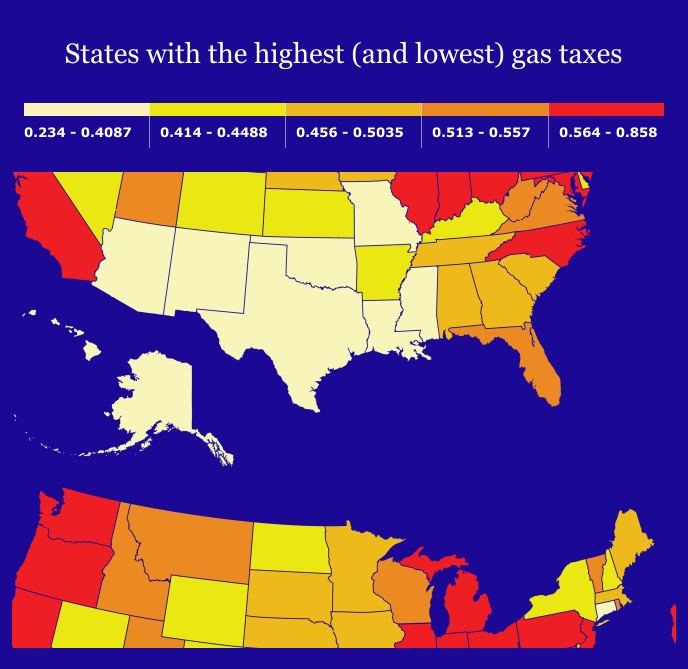
The map below shows how gas taxes in your state stack up to averages in other locations. The numbers below include the 2023 federal gas tax of 18.3 cents per gallon.

Why are gas prices so high?
State taxes are one of the elements that contribute to high gas prices in the U.S., and they also factor into the startling gaps in prices between states.
The biggest determinant of gas prices is globally priced crude oil, but costs for refining and distribution also affect gas prices and can vary by state and by season. Crude oil represents about 50% of what drivers pay for gasoline.
Gas stations set prices based on the acquisition costs from oil companies. Stations are usually owned by independent retailers, and they contract with big corporations like Shell and ExxonMobil for brand licensing and fuel supply.
Gas prices can be higher in expensive cities where owners take a higher cut because stations are more expensive to operate.
Supply and demand also factor into gas prices. Prices often rise during times of the year when demand from drivers is high, namely during the summer driving season. And a lack of supply for one reason or another can also push prices higher regionally.
Fuel blends affect gas prices too. Every spring, states gradually transition to a more expensive summer-grade gasoline, which usually can cause prices to spike going into warmer months.
When you buy a gallon of gas, you’re generally paying several taxes with or without realizing it. Those generally include the federal tax, a fixed cent-per-gallon state tax and possibly other state charges like use taxes, inspection fees and environmental fees, according to the EIA.
They all add up to an average of about 50 cents per gallon nationally, though how much people pay in gas taxes varies widely from state to state.
Especially on the West Coast, where gas prices tend to be highest, drivers may wonder why they’re paying so much more per gallon than people in states like Texas and Louisiana. Taxes are one factor. Refining capacity, state-specific gasoline blends and distribution mechanisms are also relevant.
Politicians like California Gov. Gavin Newsom often blame oil companies for price gouging, but some experts say bad policy and high taxes are more responsible for the sky-high prices.
At least five states (New York, Maryland, Georgia, Florida and Connecticut) suspended certain gas taxes or fees for a period of time in 2022 to give drivers relief amid some of the highest gas prices ever last year. Other states like Kentucky and Illinois didn’t suspend gas taxes, but they did postpone previously planned tax increases. Now that gas prices have come down, some states are raising gas taxes again.
States with the highest gas taxes
According to the EIA, the 10 states where drivers pay the highest average gas taxes in 2023 are:
- Illinois: 85.8 cents
- California: 83.5 cents
- Pennsylvania: 80.6 cents
- Indiana: 72.3 cents
- Washington: 70.8 cents
- Michigan: 68.6 cents
- Maryland: 61.3 cents
- New Jersey: 59.9 cents
- North Carolina: 59.2 cents
- Ohio: 56.9 cents
States where gas taxes are lowest
The states with the lowest gas taxes are:
- Connecticut: 23.4 cents
- Alaska: 27.4 cents
- Mississippi: 36.8 cents
- Hawaii: 36.9 cents
- New Mexico: 37.3 cents
- Arizona: 37.4 cents
- Oklahoma: 38.4 cents
- Texas: 38.4 cents
- Louisiana: 39.3 cents
- Missouri: 40.9 cents
Disclaimer
Artificial Intelligence Disclosure & Legal Disclaimer
AI Content Policy.
To provide our readers with timely and comprehensive coverage, South Florida Reporter uses artificial intelligence (AI) to assist in producing certain articles and visual content.
Articles: AI may be used to assist in research, structural drafting, or data analysis. All AI-assisted text is reviewed and edited by our team to ensure accuracy and adherence to our editorial standards.
Images: Any imagery generated or significantly altered by AI is clearly marked with a disclaimer or watermark to distinguish it from traditional photography or editorial illustrations.
General Disclaimer
The information contained in South Florida Reporter is for general information purposes only.
South Florida Reporter assumes no responsibility for errors or omissions in the contents of the Service. In no event shall South Florida Reporter be liable for any special, direct, indirect, consequential, or incidental damages or any damages whatsoever, whether in an action of contract, negligence or other tort, arising out of or in connection with the use of the Service or the contents of the Service.
The Company reserves the right to make additions, deletions, or modifications to the contents of the Service at any time without prior notice. The Company does not warrant that the Service is free of viruses or other harmful components.