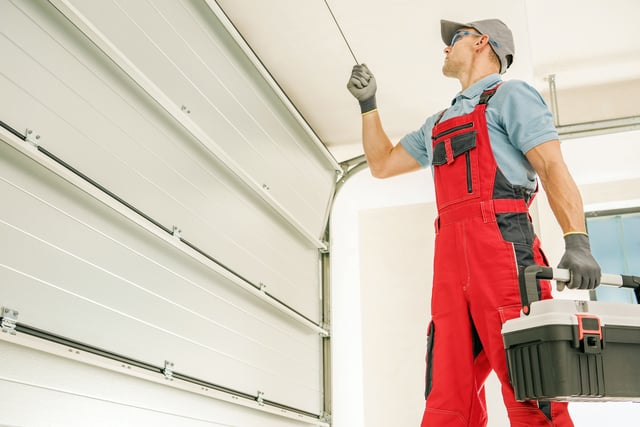
Whether you live in the humid heat of the South or the freezing north, your garage door is likely the hardest working entry point in your home. It opens and closes thousands of times a year, protecting your vehicles and storage from the elements. Yet, it is often the most neglected system until it fails. A broken garage door can trap your car, compromise your home’s security, and lead to expensive emergency repairs.
Maintaining this massive moving wall doesn’t require a degree in engineering. With a few proactive steps and an understanding of how weather affects your door and opener, you can extend their lifespans by years. This guide breaks down the essential maintenance tasks that keep your system quiet, safe, and reliable, regardless of where you live.
The Impact of Weather on Your Hardware
Climate plays a huge role in how your garage door ages. In hot, humid environments, moisture in the air can lead to rust on steel tracks, springs, and hinges. Salt air in coastal regions accelerates this corrosion, silently eating away at metal components. On the flip side, extreme cold causes metal to contract and lubricants to thicken, making the motor work harder to lift the door.

Understanding your local environment is key. If you are in a coastal area, washing your garage door regularly and using a rust inhibiting lubricant is nonnegotiable. In colder zones, checking the bottom seal to ensure it hasn’t frozen to the concrete is a daily winter habit. No matter what the climate, the goal is the same: keep moisture out and keep moving parts lubricated.
Lubrication: The Secret to Silence
A noisy garage door is more than just an annoyance; it is a cry for help. Grinding, squeaking, and rattling sounds usually mean that metal parts are rubbing against each other without protection. This friction causes rapid wear and tear.
To fix this, invest in a can of high-quality silicone spray or white lithium grease. Avoid using WD 40, which is a solvent that can actually strip away existing grease and attract dust. Twice a year, spray the hinges, the rollers (if they are metal), and the torsion springs. Do not lubricate the tracks themselves; simply wipe them clean with a rag to remove grit and debris. This simple five-minute task can make your door whisper quiet and significantly reduce strain on the opener.
Safety Sensor Alignment and Care
Modern garage doors are equipped with photo eye sensors located near the floor on either side of the track. These sensors project an invisible beam that, when broken, stops the door from closing and reverses it. This is a critical safety feature that protects children, pets, and your vehicle from being crushed.
However, these sensors are sensitive. A bump from a lawnmower, a stray basketball, or even a spider web can knock them out of alignment or block the beam. If your door refuses to close and the opener lights blink, check the sensors first. Clean the lenses with a soft cloth and gently adjust the brackets until the indicator lights on both sensors are solid. Regular checks ensure this vital safety net is always active.
The Importance of Professional Inspections
While there is a lot you can do yourself, some parts of the garage door system are dangerous to touch. The torsion springs located above the door are under immense tension. They are what actually lift the heavy weight of the door. If a spring snaps, it can cause severe injury or property damage.
For high tension repairs or complex opener issues, it is always best to call in a professional. Expert technicians have the tools and training to safely wind springs, replace frayed cables, and diagnose logic board failures. For instance, if you are looking for Superior Garage Door Repair, choosing a reputable company ensures you get factory certified parts and labor warranties that protect your investment.
Recognizing the Signs of Wear
Being observant can save you a lot of money. Watch your door as it opens and closes. Does it move smoothly, or does it jerk and shudder? Is the bottom seal intact, or is it cracked and letting in light? Frayed cables are a major red flag that requires immediate attention. If you see strands of wire starting to unravel, do not use the door until it is fixed.
In regions with severe winters, the stress on these components is magnified. Homeowners seeking garage door repair st michael mn often find that preventative tune ups in the fall save them from being stuck with a broken door in the dead of winter. Addressing these small signs of wear early prevents catastrophic failures that can leave your home exposed.
Smart Upgrades for Peace of Mind
If your opener is more than 15 years old, consider upgrading to an innovative model. Modern openers come with Wi-Fi connectivity, allowing you to monitor and control your door from your smartphone. You can receive alerts if the door is left open, set schedules for automatic closing, and even grant temporary access to guests.
Battery backup is another game changing feature. In areas prone to storms and power outages, a battery backup ensures you can still get your car in and out of the garage when the grid goes down. These upgrades add a layer of convenience and security that traditional openers cannot match.
Final Thoughts
Your garage door is an integral part of your home’s security and functionality. By dedicating a little time to maintenance and staying ahead of repairs, you ensure it serves you reliably for years. Whether you are battling rust in the south or freezing springs in the north, a well maintained door is the mark of a safe and efficient home.
Disclaimer
Artificial Intelligence Disclosure & Legal Disclaimer
AI Content Policy.
To provide our readers with timely and comprehensive coverage, South Florida Reporter uses artificial intelligence (AI) to assist in producing certain articles and visual content.
Articles: AI may be used to assist in research, structural drafting, or data analysis. All AI-assisted text is reviewed and edited by our team to ensure accuracy and adherence to our editorial standards.
Images: Any imagery generated or significantly altered by AI is clearly marked with a disclaimer or watermark to distinguish it from traditional photography or editorial illustrations.
General Disclaimer
The information contained in South Florida Reporter is for general information purposes only.
South Florida Reporter assumes no responsibility for errors or omissions in the contents of the Service. In no event shall South Florida Reporter be liable for any special, direct, indirect, consequential, or incidental damages or any damages whatsoever, whether in an action of contract, negligence or other tort, arising out of or in connection with the use of the Service or the contents of the Service.
The Company reserves the right to make additions, deletions, or modifications to the contents of the Service at any time without prior notice. The Company does not warrant that the Service is free of viruses or other harmful components.